Safer Events Start with Better Site Flow
Planning a corporate event in Winnipeg is exciting.
But it also comes with real site responsibilities.
Guests are arriving.
Vendors are unloading.
Staff are moving equipment.
Vehicles are entering and exiting.
Emergency access needs to stay clear.
That is why traffic control equipment matters.
When planned properly, traffic control helps reduce confusion, prevent bottlenecks, and create a safer experience from the first arrival to the final teardown.
Why Traffic Control Matters at Corporate Events
Traffic control is not just about cars.
It is about the full movement system around your event.
That includes:
🚗 Guest vehicles
🚶 Pedestrians
🚚 Delivery trucks
♿ Accessible parking users
👷 Event staff
🚨 Emergency access routes
When all of these groups are moving at the same time, a clear plan becomes essential.
Common Risk Areas at Corporate Events
Most event traffic problems happen in predictable places.
These include:
❌ Busy entrances
❌ Parking lots
❌ Vendor load-in areas
❌ Guest drop-off zones
❌ Emergency access lanes
❌ Low-light areas
❌ Wet or icy walkways
With the right equipment and layout, many of these issues can be prevented before guests arrive.
Start by Mapping Movement
Before renting traffic control equipment, identify how people and vehicles will move through the site.
Ask:
✔ Where will guests arrive?
✔ Where will vendors unload?
✔ Where will staff park?
✔ Where is accessible parking?
✔ Where are emergency access routes?
✔ Where will pedestrians cross vehicle paths?
Once you understand the movement patterns, it becomes much easier to choose the right equipment.
Essential Traffic Control Equipment
Most corporate events benefit from a simple, practical traffic control setup.
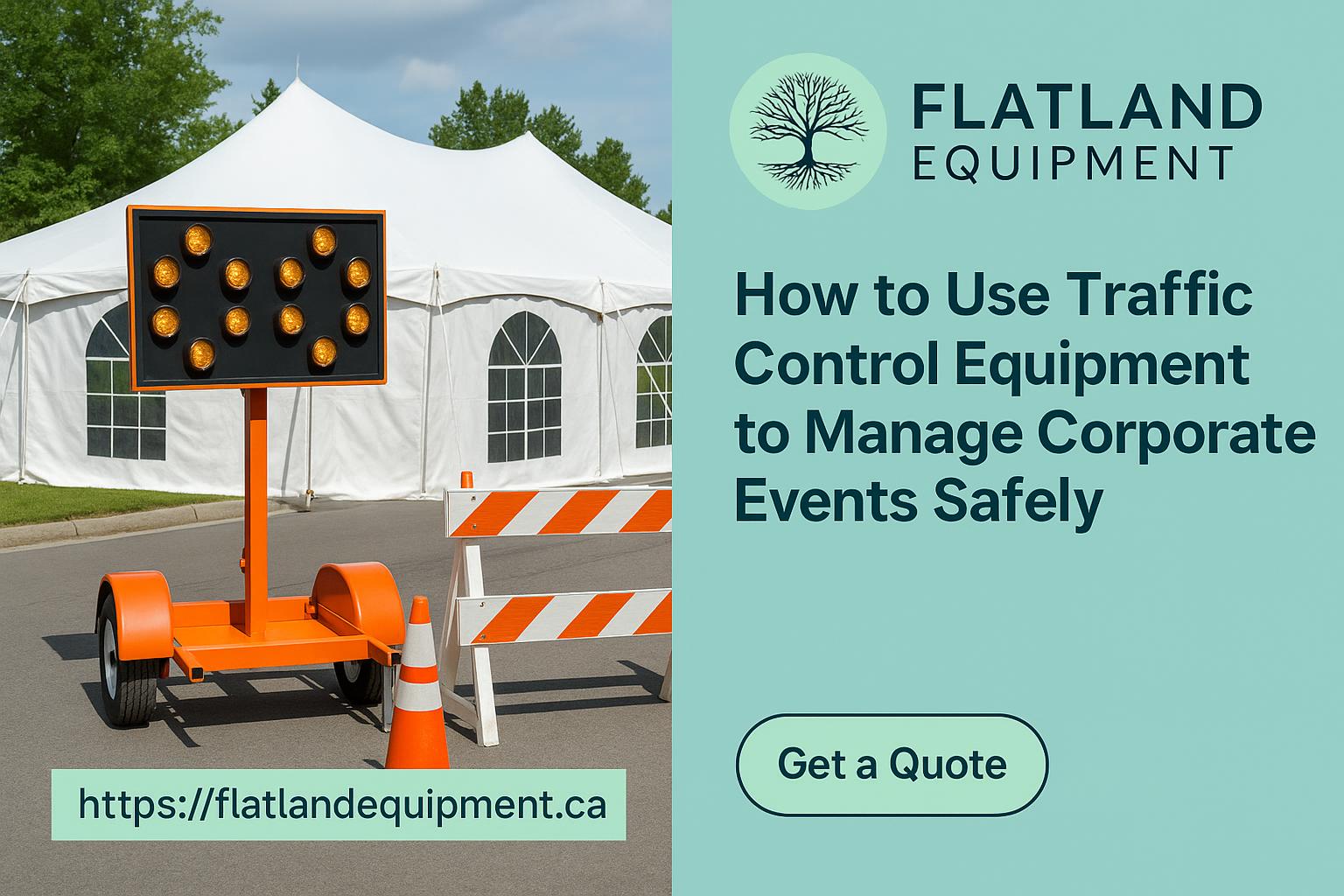
🚧 Traffic Cones
Traffic cones are one of the fastest ways to create temporary structure.
Use them to:
✔ Define parking lanes
✔ Block restricted areas
✔ Mark temporary closures
✔ Separate vehicles from pedestrians
✔ Guide drop-off zones
Cones are especially useful during setup and teardown.
🚧 Barricade Rails
Barricade rails create stronger visual boundaries than cones.
They are useful for:
✔ Line management
✔ Equipment protection
✔ Restricted access zones
✔ Cable protection areas
✔ Crowd flow control
They help guests understand where they should and should not go.
➡️ Location Arrows
Clear signage reduces questions.
Location arrows help guide guests toward:
✔ Parking
✔ Registration
✔ Entrances
✔ Exits
✔ Washrooms
✔ Event areas
Good signage makes the event feel more organized and professional.
🛑 Stop/Slow Paddles
Stop/slow paddles are useful when vehicle movement needs to be controlled temporarily.
Common uses include:
✔ Vendor access points
✔ Shuttle or bus arrivals
✔ Pedestrian crossings
✔ Controlled parking lot movement
They are especially helpful when event staff need to manage short traffic pauses.
🔦 Traffic Wands
Traffic wands improve visibility during:
✔ Evening events
✔ Winter events
✔ Low-light parking areas
✔ Rainy conditions
✔ Large arrival windows
They help staff direct vehicles safely without needing to stand too close to traffic.
🦺 Safety Vests
High-visibility vests help staff stand out.
They are useful for:
✔ Parking attendants
✔ Load-in crews
✔ Safety staff
✔ Event greeters
✔ Traffic coordinators
Visible staff make guests feel more confident and help drivers respond faster.
Create Clear Event Zones
A safe event layout usually includes three main zones.
Public Zone
This is where guests move.
It includes:
✔ Guest parking
✔ Walkways
✔ Registration
✔ Entrances
✔ Seating areas
Back-of-House Zone
This is where staff and vendors operate.
It includes:
✔ Catering areas
✔ AV setup
✔ Staff parking
✔ Storage
✔ Rental equipment staging
Service Zone
This is where deliveries and loading happen.
It includes:
✔ Load-in areas
✔ Load-out areas
✔ Waste removal
✔ Equipment delivery
✔ Vendor access
When these zones are clearly separated, the entire event runs more smoothly.
Protect Pedestrian Routes First
Pedestrian safety should always come first.
Create clear walking paths from parking areas to event entrances.
Use:
✔ Cones
✔ Barricade rails
✔ Directional arrows
✔ Lighting
✔ Staff in safety vests
If guests can easily understand where to walk, your event immediately feels safer and more organized.
Plan Drop-Off Areas Carefully
Ride-shares, taxis, shuttles, and family drop-offs can create congestion quickly.
A good drop-off area should include:
✔ A clear entry point
✔ A clear exit point
✔ Enough space for vehicles to pause
✔ Signage before the stop area
✔ Staff support during peak arrivals
A simple drop-off plan prevents blocked entrances and frustrated guests.
Keep Emergency Access Clear
Emergency access should never be treated as optional.
Always keep clear routes for:
🚒 Fire response
🚑 Ambulance access
🚓 Emergency vehicles
🚚 Service vehicles when required
Avoid placing cones, tents, furniture, bins, or staging materials in emergency access lanes.
When in doubt, leave more space than you think you need.
Winnipeg Weather Adds Extra Challenges
Manitoba weather can change quickly.
Rain.
Wind.
Snow.
Ice.
Early darkness.
All of these affect traffic control.
Weather Planning Tips
✔ Use traffic wands for low-light conditions
✔ Keep pedestrian routes away from muddy areas
✔ Avoid slippery surfaces where possible
✔ Secure lightweight signage in windy conditions
✔ Add staff visibility with safety vests
✔ Plan lighting for entrances and crossings
A good traffic plan accounts for the weather before it becomes a problem.
Traffic Control Works with Tent Layouts
Traffic control should be planned together with your event layout.
This includes:
🎪 Tent placement
🪑 Tables and chairs
⚡ Power distribution
🍔 Catering access
🚚 Delivery routes
♻ Waste removal areas
For tented events, keep guest paths away from staking zones, cords, service vehicles, and back-of-house areas.
Power and Cable Safety
Many corporate events require power for:
🎤 Microphones
🔊 Speakers
💡 Lighting
🔥 Heaters
💻 Registration tables
☕ Catering stations
Traffic control equipment can help protect cable paths and keep pedestrians away from technical zones.
Use barriers or cones where cables, generators, or power distribution areas need extra visibility.
Common Corporate Event Setups
Indoor Event with Busy Parking
Even indoor events need parking control.
Use cones, arrows, traffic wands, and visible staff to guide guests from parking areas to the entrance.
Outdoor Tented Event
For company BBQs, appreciation days, and product launches, separate guest access from vendor and service routes.
Use barricade rails near food lines, kids areas, and high-traffic zones.
Multi-Day Festival or Public Activation
Keep routes consistent from day to day.
Use signage and barricades so guests, vendors, and staff understand the layout quickly.
Film and TV Production Sites
Productions require extra organization.
Traffic control can help manage:
✔ Base camp boundaries
✔ Crew parking
✔ Equipment movement
✔ Pedestrian crossings
✔ Neighbourhood access
✔ Service vehicle flow
Better Traffic Control Helps Control Costs
Traffic control is one of the most affordable ways to reduce event risk.
A clear plan helps avoid:
❌ Delayed load-ins
❌ Vendor confusion
❌ Guest complaints
❌ Safety incidents
❌ Last-minute layout changes
❌ Blocked access routes
Good planning protects your budget and your reputation.
Pre-Event Traffic Control Checklist
The Day Before
✔ Confirm vendor arrival times
✔ Review site map
✔ Identify emergency access routes
✔ Check weather forecast
✔ Confirm parking and drop-off areas
✔ Prepare signage and equipment
The Day Of
✔ Set cones and barricades early
✔ Place arrows before guest arrival
✔ Assign staff to key traffic points
✔ Use safety vests and wands where needed
✔ Walk the site before doors open
✔ Fix pinch points immediately
Why Winnipeg Organizations Choose Flatland Equipment
Flatland Equipment supports corporate events, festivals, productions, and community gatherings with practical equipment solutions.
We provide:
✔ Traffic cones
✔ Barricade rails
✔ Location arrows
✔ Stop/slow paddles
✔ Traffic wands
✔ Safety vests
✔ Tent rentals
✔ Tables and chairs
✔ Power support equipment
✔ Event planning support
Our goal is simple:
Help your event run safely, smoothly, and professionally.
Service Areas
Flatland proudly serves Winnipeg and surrounding communities including:
St. James-Assiniboia, River Heights, Transcona, Charleswood, Fort Garry, St. Vital, West Kildonan, North Kildonan, Fort Rouge, St. Boniface, Osborne Village, Exchange District, Corydon Village, Tuxedo, Point Douglas, Inkster, Seven Oaks, The Maples, Garden City, Whyte Ridge, Island Lakes, Sage Creek, Bridgwater Forest, Bridgwater Lakes, Bridgwater Centre, South Pointe, Royalwood, Richmond West, River Park South, North Point Douglas, Headingley, Oak Bluff, La Salle, St. Norbert, Niverville, Birds Hill, East St. Paul, West St. Paul, Stony Mountain, Lockport, Selkirk, St. Andrews, Lorette, Landmark, St. Adolphe, St. Francois Xavier, Sanford, Starbuck, and Ile des Chenes.
Book Traffic Control Equipment Early
If you are planning a corporate event, festival, production day, or public activation, now is the time to organize your traffic control equipment.
Early planning helps protect:
✔ Guests
✔ Staff
✔ Vendors
✔ Emergency access
✔ Your schedule
✔ Your budget
📞 Call Flatland Equipment today at (204) 416-7229
🌐 https://flatlandequipment.ca/
Let’s help you create a safer, smoother, and more professional event site.