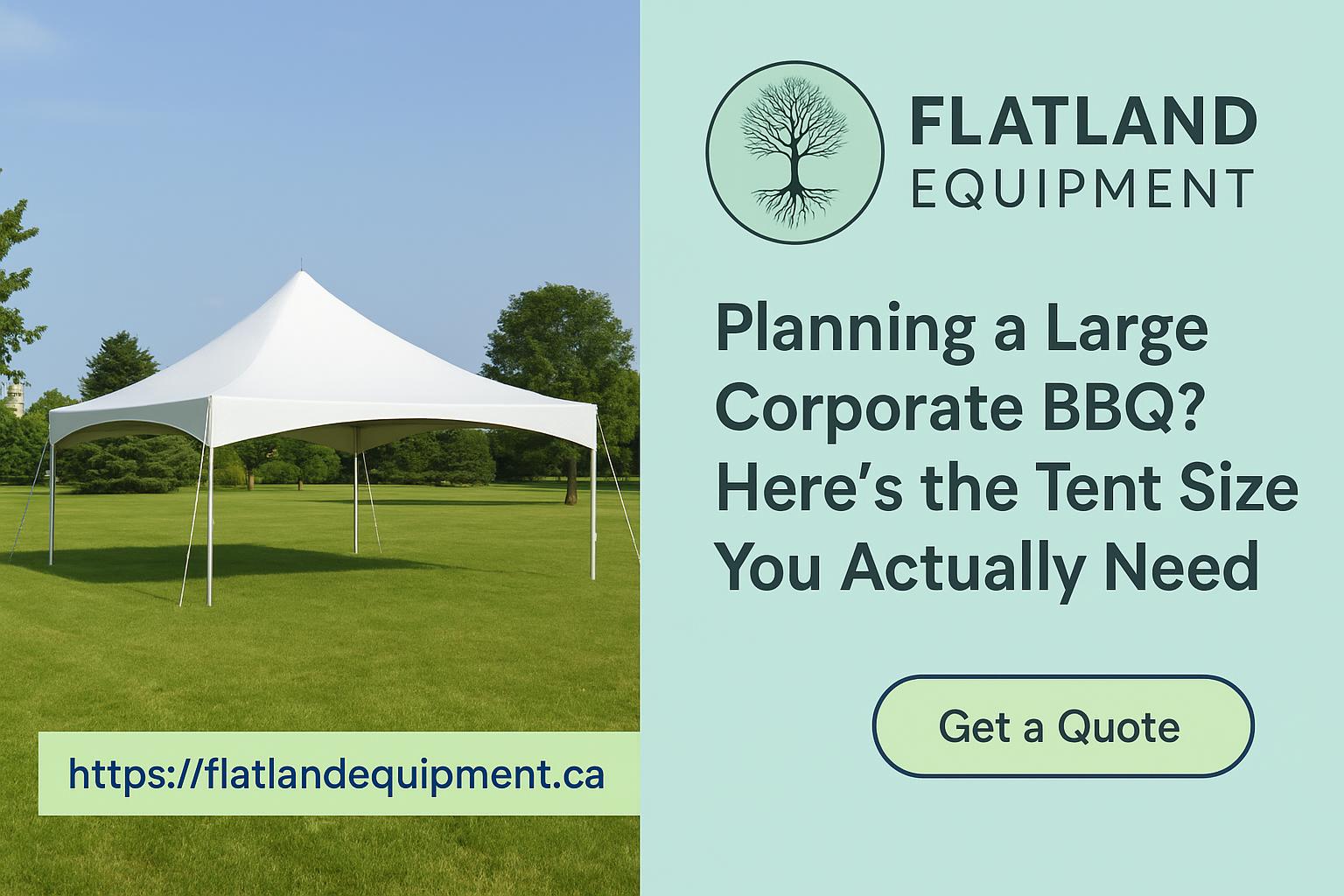
Planning a Large Corporate BBQ? Here’s the Tent Size You Actually Need
Booking the right corporate tent rental in Winnipeg comes down to one thing: matching your guest count to the real footprint of how people will eat, move, line up, and stay comfortable if the weather turns. This guide gives you practical tent sizes, layout planning tips, and Manitoba-ready weather planning so your BBQ runs smoothly from setup to teardown.
Start With the Real Headcount (Not the RSVP List)
For corporate events, the number that matters is the number of people on-site at peak time. If your BBQ is “drop-in” style over a few hours, peak attendance can be 60 to 80 percent of the full invite list, but it depends on shift schedules and location. If it’s a set meal time, plan for 85 to 100 percent.
Before you choose a size, confirm these basics:
- Total guests (peak attendance)
- Seated meal, standing mingle, or a mix
- Serving style (buffet, food trucks, catered stations, or BBQ line)
- Stage or speeches (yes or no)
- Bar, coffee station, dessert table, or sponsor tables
- Accessibility needs and wider aisles
- Weather plan (sidewalls, heaters, fans)
Quick Tent Size and Capacity Guide (Corporate BBQ Layouts)
Capacities vary based on layout. Standing crowds pack tighter than seated meals, and buffet lines require extra space. Use these as reliable planning ranges for corporate BBQ tent rentals in Winnipeg.
20×20 Tent (400 sq ft)
- Standing reception: about 25 to 40 people
- Seated dining (tables and chairs): about 20 to 28 people
- Best for: registration, dessert station, bar, small team BBQs, shade cover
20×30 Tent (600 sq ft)
- Standing reception: about 40 to 60 people
- Seated dining: about 30 to 42 people
- Best for: smaller corporate BBQ seating plus a buffet line
20×40 Tent (800 sq ft)
- Standing reception: about 55 to 80 people
- Seated dining: about 40 to 56 people
- Best for: mid-size BBQs, catered buffet setup, comfortable aisle space
30×30 Tent (900 sq ft)
- Standing reception: about 70 to 95 people
- Seated dining: about 50 to 65 people
- Best for: a strong “main tent” for 50 to 70 guests with food service space
30×40 Tent (1,200 sq ft)
- Standing reception: about 95 to 130 people
- Seated dining: about 70 to 90 people
- Best for: most large corporate BBQs, with room for buffet and circulation
40×60 Tent (2,400 sq ft)
- Standing reception: about 180 to 260 people
- Seated dining: about 140 to 180 people
- Best for: big company BBQs, awards, speeches, and multiple service lines
40×80 Tent (3,200 sq ft)
- Standing reception: about 240 to 350 people
- Seated dining: about 190 to 240 people
- Best for: high-attendance BBQs, sponsor tables, larger staging and AV
If you’re torn between two sizes, go up one size. In Winnipeg, the “extra space” is what keeps lines shorter, helps people stay comfortable, and gives you options if rain or wind shows up. 🙂
How to Choose the Right Layout (Seated, Standing, or Hybrid)
Option A: Mostly Seated (Best for employee appreciation meals)
Choose this when the meal is the main event. You’ll need more square footage because chairs, aisles, and table spacing are what make the tent feel professional instead of cramped.
- Plan for comfortable aisles for serving and mobility
- Leave space for strollers, wheelchairs, and mobility devices
- Include at least one dedicated area for drinks and condiments to reduce table traffic
Option B: Mostly Standing (Best for open-house BBQs)
Standing receptions fit more people, but you still need room for lines, high-top tables, and traffic flow. Standing works best when guests come and go, and when food service is fast.
- Add cocktail tables so guests can comfortably eat and network
- Split food service into two lines if attendance is high
- Keep entrances wide and obvious to prevent bottlenecks
Option C: Hybrid (Most common for corporate BBQs)
A hybrid setup usually feels best: some seating for eating, and open areas for mingling. This approach reduces the need for “everyone seated at once” while still keeping the event comfortable for all ages.
Don’t Forget the Non-Negotiable Space: Food, Lines, and Back-of-House
The biggest reason corporate tents feel too small is that food service was treated like an afterthought. Your tent isn’t just for guests, it’s also for:
- Buffet tables or serving stations
- BBQ line management and queue lanes
- Handwashing station placement
- Catering staging (hot boxes, prep tables, garbage and recycling)
- Cooler space and beverage tubs
If you have food trucks on-site, you may still want a tent for shaded seating, plus a smaller tent for registration, sponsor signage, or an info table.
Power Distribution for AV, Catering, and Registration
Corporate BBQs often need more power than expected, especially with speakers, microphones, background music, catering equipment, coffee urns, and charging stations. Plan power early so you don’t end up running cords across walkways at the last minute.
Common power needs include:
- AV and music (speaker, mic, laptop)
- Registration and check-in (tablet, printer)
- Lighting (work lights or string lighting)
- Catering stations (depending on equipment)
Flatland can support power planning with practical add-ons like extension cords, power bars, and work lights. If your site needs generator support, flag it early so the layout and cable runs stay clean and safe.
Weather Planning for Winnipeg and Manitoba (Sidewalls Matter)
Manitoba weather can change quickly, even on a day that starts sunny. A tent is your insurance policy, but only if you plan for wind, temperature swings, and sudden rain.
Wind and rain
- Choose a properly secured, professionally installed tent
- Consider sidewalls to block driving rain and wind
- Keep at least one entrance point clear to avoid crowding during a downpour
Cold snaps and evening temperature drops
- Heaters can keep guests comfortable when temperatures dip
- Sidewalls help hold warmth and cut drafts
- Plan a slightly larger tent if you’ll be enclosing it, since airflow changes
Heat and sun
- Fans improve comfort and circulation on warm days
- Shade coverage matters for food tables and seating
- Keep water and drinks accessible to prevent long lines
Setup, Safety, and Site Logistics (What Corporate Teams Care About)
Corporate planners need predictability: clear timing, safe installation, and minimal disruption to operations. Flatland handles full tent installation with professional crews and a safety-first approach, coordinating setup and teardown around your schedule.
To keep things smooth, be ready to confirm:
- Exact install location and site access
- Underground utility considerations and safe anchoring
- Delivery route for trucks and crew access
- Preferred setup and teardown times (including after-hours options when available)
Permits, Compliance, and Fire Code Basics
Depending on location, tent size, and event setup, you may need permits and fire safety considerations. Planning for compliance protects your team and reduces last-minute stress.
Typical planning items include:
- City permit guidance (when required)
- Clear exits and unobstructed pathways
- Fire extinguisher access where needed
- Keeping heat sources and cooking equipment properly positioned
If your event is on corporate property, confirm internal safety requirements too, especially if your site has security protocols, restricted zones, or contractor check-in procedures.
Event Flow and Space Design (Make It Feel Effortless)
The best corporate BBQs feel easy: guests know where to go, lines move quickly, and the tent feels open. Good flow is a layout decision, not a day-of fix.
We recommend planning these zones:
- Arrival and welcome (signage, registration, name tags if needed)
- Food service (one or two lines depending on headcount)
- Seating zone (tables arranged to keep aisles open)
- Networking zone (standing space and cocktail tables)
- Speeches and awards (small stage area or dedicated front space)
- Waste and recycling stations (multiple points to reduce litter)
Budgeting and Risk Reduction (Why Getting the Tent Right Saves Money)
Corporate events have real cost pressures and reputational risk. A tent that’s too small creates congestion, long lines, and a poor guest experience. A tent that’s too large can push you over budget without adding value.
The smart middle ground is choosing a tent size based on peak attendance and layout needs, then using add-ons strategically:
- Sidewalls only if wind, rain, or temperature calls for them
- Heaters or fans based on season and time of day
- Lighting and power support where it actually improves flow and safety
When planning for fiscal-year spend and approval cycles, booking early helps lock in availability for peak summer dates in Winnipeg.
Film and TV Production Note (Basecamp-Style Setups)
If you’re planning for a production crew instead of a BBQ, the sizing logic still applies, but the zones change. Many productions need separate areas for director seating, wardrobe, hair and makeup, catering, and equipment staging. Multi-day operations also benefit from dedicated power planning and weather protection.
If that’s your world, we can help map a basecamp layout that supports long days, changing conditions, and the practical needs of a working crew.
Related Planning Reads (For Corporate Teams)
If you’re building out a larger internal event calendar, these topics are worth reviewing next:
- Winter indoor corporate rentals and event essentials
- Summer tent rentals for company BBQs and staff events
- Event power, lighting, and site logistics planning
Who This Guide Is For
This is written for HR teams, marketing departments, safety officers, logistics managers, and municipal planners who need a reliable, Winnipeg-specific approach to tent sizing and event execution.
Trusted Locally, Built for High-Volume Events
Flatland Equipment supports high-volume operations across Winnipeg, including major events and complex schedules. When the guest count is large and the timeline matters, having an experienced tent-rental partner helps everything run cleaner and safer.
Service Areas
In Winnipeg: St. James-Assiniboia, River Heights, Transcona, Charleswood, Fort Garry, St. Vital, West Kildonan, North Kildonan, Fort Rouge, St. Boniface, Osborne Village, Exchange District, Corydon Village, Tuxedo, Point Douglas, Inkster, Seven Oaks, The Maples, Garden City, Whyte Ridge, Island Lakes, Sage Creek, Bridgwater Forest, Bridgwater Lakes, Bridgwater Centre, South Pointe, Royalwood, Richmond West, River Park South, North Point Douglas.
Surrounding Areas: Headingley, Oak Bluff, La Salle, St. Norbert, Niverville, Birds Hill, East St. Paul, West St. Paul, Stony Mountain, Lockport, Selkirk, St. Andrews, Lorette, Landmark, St. Adolphe, St. Francois Xavier, Sanford, Starbuck, Ile des Chenes.
Need to head out of town with the truck? Just let us know and we’ll make sure you’re good to go.
If you want a fast, accurate recommendation, call Flatland Equipment at (204) 819-0551 or request a quote at https://flatlandequipment.ca/ and we’ll size the right tent rental for your Winnipeg corporate BBQ based on your headcount, layout, and weather plan.