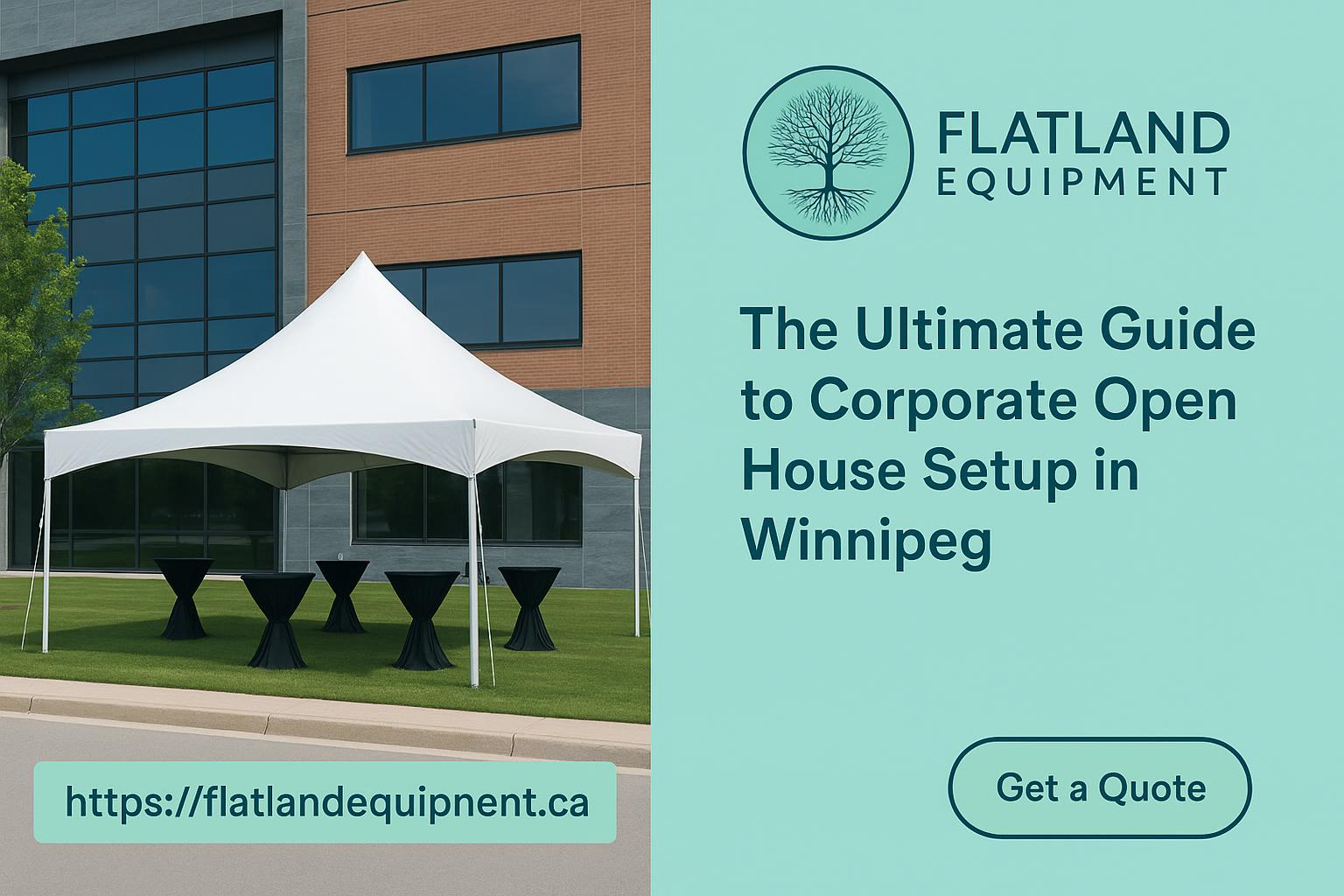
The Ultimate Guide to Corporate Open House Setup in Winnipeg
Planning a polished open house is equal parts hospitality and logistics. If you are pricing and coordinating corporate tent rentals in Winnipeg, this guide will help you build a weather-ready setup, keep guests comfortable, and keep your schedule on track. We will walk through tent sizing, layout planning, climate control, power distribution, safety gear, and the little details that make an event feel effortless.
Flatland Equipment supports corporate open houses, multi-day activations, municipal events, and base-camp style setups across Winnipeg. Expect practical guidance, local Manitoba considerations, and a clear checklist you can share with internal stakeholders. 🙂
Start With the Outcome: What Your Open House Needs to Do
Before you choose a tent size or rental package, define what success looks like. Most corporate open houses need a mix of brand experience and operational flow. Ask these questions early:
- Is this a public-facing open house, an invite-only VIP event, or a staff and family day?
- Will you host speeches, a product demo, a plant tour, or a ribbon cutting?
- Do you need registration, security check-in, or name tags at the door?
- Will food service be light snacks, full catering, or multiple vendor stations?
- Are you planning daytime only, or do you need evening lighting and extended power?
Once the objective is clear, your tent plan and equipment list become much easier to defend internally for budget approval and risk management.
Understanding Corporate Tent Rentals in Winnipeg
Tents are not just overhead cover. In Winnipeg, they are often your backup plan for wind, cold snaps, sudden rain, and big temperature swings. The right tent setup can also help you control branding, manage lineups, and create defined zones for presentations and networking.
Common tent sizes and what they are good for
Corporate setups typically use modular frame or pole-style layouts, with sizing that scales as your guest list grows. Common footprints include 20×20 for small activations and 40×160 tents for large-scale events and long runs. Your final footprint depends on how you use the space, not only the number of people.
Practical planning note: Guest counts can be misleading because cocktail-style mingling needs less space than seated presentations, while food service, staging, and equipment storage add square footage quickly. If you are unsure, build your plan around zones first, then size the tent to match.
Sidewalls, entrances, and the Winnipeg weather factor
For Manitoba conditions, sidewalls and controlled entry points are often the difference between a comfortable event and a constant scramble. Sidewalls help reduce wind, retain heat when using heaters, and provide a more finished look for corporate branding and signage.
Planning Your Tent Setup: The Winnipeg Checklist
A smooth corporate open house setup starts with a simple structure: site, schedule, weather plan, and guest flow. Here is the short checklist that prevents most day-of issues:
- Site conditions: grass, asphalt, concrete, or mixed surfaces affect anchoring and flooring choices.
- Access: confirm delivery routes, gate widths, overhead clearance, and staging space for install.
- Install schedule: plan enough time for build, inspections if required, and final dressing.
- Weather contingency: decide in advance when to add sidewalls, heaters, fans, or extra flooring.
- Guest flow: define the entrance, registration, and exits before you place furniture or food.
Weather contingency planning for Manitoba
Winnipeg weather can change quickly. A proper plan includes wind-rated tents and a comfort strategy that matches the season:
- Spring and fall: heaters, sidewalls, and wind planning reduce cold drafts and temperature drops.
- Summer: fans, ventilation, and shade placement help prevent heat buildup, especially on asphalt.
- Rain: plan dry entry areas and keep electrical connections protected and elevated.
When comfort is handled, your team spends less time reacting and more time hosting.
Furniture That Supports Networking, Demos, and Presentations
Furniture is where corporate open houses either feel intentional or feel improvised. Use tables and seating to create natural traffic flow, encourage conversation, and support your program.
Core tables and chairs for corporate events
- Tables: 6 ft and 8 ft banquet tables for food and displays, 60 inch round tables for group seating, and cocktail tables for standing networking areas.
- Chairs: standard event chairs for seating rows, plus premium options like director and cast chairs for stage areas, VIP zones, or production-style setups.
Layout tips that feel polished
- Keep the first 10-15 feet inside the entrance open to prevent congestion.
- Place registration to the side of the main path so lineups do not block arrivals.
- Set food stations away from doors to reduce bottlenecks and avoid cold drafts on catering.
- Build a clear presentation zone with a defined audience area, even if it is casual seating.
Climate Comfort: Heaters, Fans, Subflooring, and Sidewalls
Comfort is the fastest way to protect attendance and keep guests onsite longer. Climate control is not a luxury for Winnipeg events, it is a practical safeguard.
Heating and cooling essentials
- Heaters: ideal for shoulder seasons, evenings, and windy conditions when sidewalls are installed.
- Fans: improve airflow during hot days and help keep enclosed tents comfortable.
- Sidewalls: reduce wind and help stabilize interior temperature.
- Subflooring: improves comfort and accessibility, especially on uneven ground or wet conditions.
Lighting for safety and atmosphere
Lighting is both a safety requirement and a brand tool. For evening events, 30 ft string lights add warm coverage and improve visibility for walking paths, seating areas, and food stations.
If you are planning AV, product demos, or speeches, ensure the lighting plan does not create glare on screens or wash out your presentation area.
Power Distribution Essentials for Open Houses
Power planning is where corporate events often run into last-minute problems. Build your power plan around what must stay online: registration, catering, heating, lighting, and AV.
Common power needs
- Work lights: for install, teardown, and any dim areas around entrances and service zones.
- Power bars: for controlled, organized distribution at registration and AV stations.
- Extension cords: appropriately gauged cords sized for the load and the distance required.
Safety note: Keep cords routed along edges, taped or protected where needed, and away from high-traffic walkways. If heaters or high-load equipment are involved, confirm load requirements in advance so you are not tripping breakers mid-event.
If you want a deeper planning approach, link internally to a supporting resource such as a “Power Planning Checklist for Outdoor Events” article on your site.
Traffic Control and Safety Management
Corporate open houses often include vehicle movement, deliveries, and pedestrian traffic all at once. A visible, consistent safety plan protects guests and simplifies operations for your team.
Traffic management tools that keep flow clear
- Traffic cones for lane guidance, parking routes, and restricted areas
- Safety vests for staff and volunteers working near vehicles
- Stop-slow paddles for controlled crossings or one-way entry points
- Barricade rails to protect queue lines, stage edges, and no-access zones
Fire safety and air quality support
Safety planning should align with Manitoba requirements and any venue rules. For many setups, you will want fire extinguishers accessible and visible. For enclosed or high-traffic environments, HEPA air purifiers can support air quality and comfort, especially when tents are fully or partially enclosed.
For complex setups, consider adding an internal link to a “Event Safety and Fire Code Basics in Manitoba” style article for further reading.
Optimizing Event Flow and Space Design
A strong layout makes your open house feel easy to navigate. The goal is to keep guests moving naturally from arrival to engagement points, without confusion or backtracking.
Build your space using zones
- Arrival zone: signage, parking guidance, and a clean entrance experience
- Welcome zone: registration, name tags, and a quick orientation point
- Showcase zone: product displays, demos, or tours staging
- Presentation zone: speeches, awards, announcements, or sponsor acknowledgments
- Hospitality zone: food, beverages, and a comfortable networking layout
- Operations zone: staff storage, waste management, and power distribution points
Even if your event is casual, zoning prevents crowding and keeps your most important moments front-and-centre.
Film and TV Production Support (When Your Open House Includes Media)
Winnipeg is a busy production city, and some corporate open houses include filming, content capture, or media coverage. If you are planning a press event or branded content day, consider adding production-style infrastructure:
- Production tents for crew shelter, gear storage, or video village style monitoring
- Cast chairs and director seating for talent holding, interviews, or VIP staging
- Makeup mirrors for on-site touchups during multi-hour schedules
- Power support for lighting, monitors, charging stations, and staging needs
Multi-day setups benefit from a consistent base-camp approach so each day starts clean and organized.
Permits, Compliance, and Fire Code Planning
Compliance planning should start early, especially for public-facing events, large tents, or setups involving heating, cooking, or enclosed spaces. Confirm what is required for your location and scope, including any city permits, site rules, and emergency access needs.
What to confirm early
- Whether your site requires approvals for temporary structures, signage, or traffic control
- Fire safety expectations, including extinguisher placement and clear egress routes
- Emergency access pathways for staff and first responders
When in doubt, plan for clear exits, wide walkways, and a layout that never traps guests behind food lines or furniture.
Why Winnipeg Teams Choose Flatland for Corporate Open Houses
Flatland Equipment supports high-volume corporate and community events across Winnipeg, including major festivals and multi-day operations such as the 2023 World Police and Fire Games. Our approach is simple: reduce vendor risk, keep the plan realistic for Winnipeg weather, and deliver an experience your stakeholders can feel confident approving.
If you already have an internal checklist or procurement requirements, we can align equipment recommendations to your timeline, budget, and site constraints.
Book Corporate Open House Rentals in Winnipeg
Ready to lock in your date and build a clean, weather-ready setup? Call (204) 819-0551 or visit https://flatlandequipment.ca/ to connect with our team. We will help you choose the right tent size, layout, power plan, climate control, and safety equipment so your open house runs smoothly from first arrival to final teardown.
Service area: In Winnipeg: St. James-Assiniboia, River Heights, Transcona, Charleswood, Fort Garry, St. Vital, West Kildonan, North Kildonan, Fort Rouge, St. Boniface, Osborne Village, Exchange District, Corydon Village, Tuxedo, Point Douglas, Inkster, Seven Oaks, The Maples, Garden City, Whyte Ridge, Island Lakes, Sage Creek, Bridgwater Forest, Bridgwater Lakes, Bridgwater Centre, South Pointe, Royalwood, Richmond West, River Park South, North Point Douglas. Surrounding Areas: Headingley, Oak Bluff, La Salle, St. Norbert, Niverville, Birds Hill, East St. Paul, West St. Paul, Stony Mountain, Lockport, Selkirk, St. Andrews, Lorette, Landmark, St. Adolphe, St. Francois Xavier, Sanford, Starbuck, Ile des Chenes. Need to head out of town with the truck? Just let us know and we’ll make sure you’re good to go.