Corporate Open House Setup in Winnipeg: The Ultimate Local Guide
Planning a corporate open house setup in Winnipeg is one of the fastest ways to turn curious visitors into confident buyers, partners, and hires. Done right, it feels easy for guests, smooth for your team, and polished for your brand. Done rushed, it turns into parking issues, bottlenecks at the door, weather stress, and last-minute rentals that cost more than they should.
This guide walks you through a proven Winnipeg-focused approach to open house planning, from site layout and tenting to power, safety, and weather protection. You will get practical checklists, real-world capacity guidance, and a simple flow that works for everything from a warehouse tour to a multi-day customer showcase. 👍
Why Winnipeg works so well for corporate open houses
Winnipeg has a strong mix of manufacturing, construction, logistics, tech, and professional services, which makes open houses a natural fit. Many companies here have yard space, loading areas, parking lots, or warehouse floors that can be transformed into a branded event environment without renting a hotel ballroom.
Winnipeg also rewards smart planning. The weather can shift quickly, and many properties have unique constraints like snow storage zones, tight gate access, uneven gravel, or shared tenant parking. When you plan for these realities early, your event feels effortless to guests.
Start with outcomes, then build the space around them
The best open houses are designed backward from the result you want. Before you price rentals or place a tent, define what success looks like and who needs to be served.
Common corporate open house goals
- Showcase equipment, facilities, or a new location
- Introduce products, services, and leadership teams
- Recruit new hires and strengthen employer brand
- Thank customers and build loyalty with a VIP experience
- Host demos with scheduled presentations
Know your audience and plan the touchpoints
Most Winnipeg open houses bring multiple groups at once. A single space should still feel intentional for each group.
- Customers want clear product access, quick Q and A points, and comfortable networking areas.
- Partners want a professional meeting zone and an easy way to connect with leadership.
- HR and recruiting visitors need signage, a quiet conversation spot, and a simple intake flow.
- Operations and logistics guests care about safety, access, and how the site actually runs.
Once you know the main outcomes, you can build a layout that naturally moves guests through the experience.
Site planning that prevents bottlenecks and keeps people moving
Event flow is the difference between a crowded entry and a high-energy open house where guests feel welcomed. You do not need a complicated blueprint, but you do need a clear plan for arrival, circulation, and exits.
Core flow zones to plan
- Arrival and parking: signage, overflow plan, and a clear walkway to check-in
- Check-in and welcome: staffed table, badges or wristbands if needed, and a handout station
- Main showcase: demos, tours, product stations, or key displays
- Networking and seating: high-top tables, lounge seating, and quieter corners for conversations
- Food and beverage: placed away from entry to reduce crowding
- Washrooms and accessibility: obvious routes, lighting, and accessible surfaces
- Exit flow: a clean path out that passes a final brand message or booking point
Winnipeg tip: If you are using a yard or parking lot, plan the guest walkway like a temporary sidewalk. Define it with stanchions, barricades, fencing, or cones so people do not drift into vehicle lanes.
Tent rentals and covered space: the backbone of a weather-ready plan
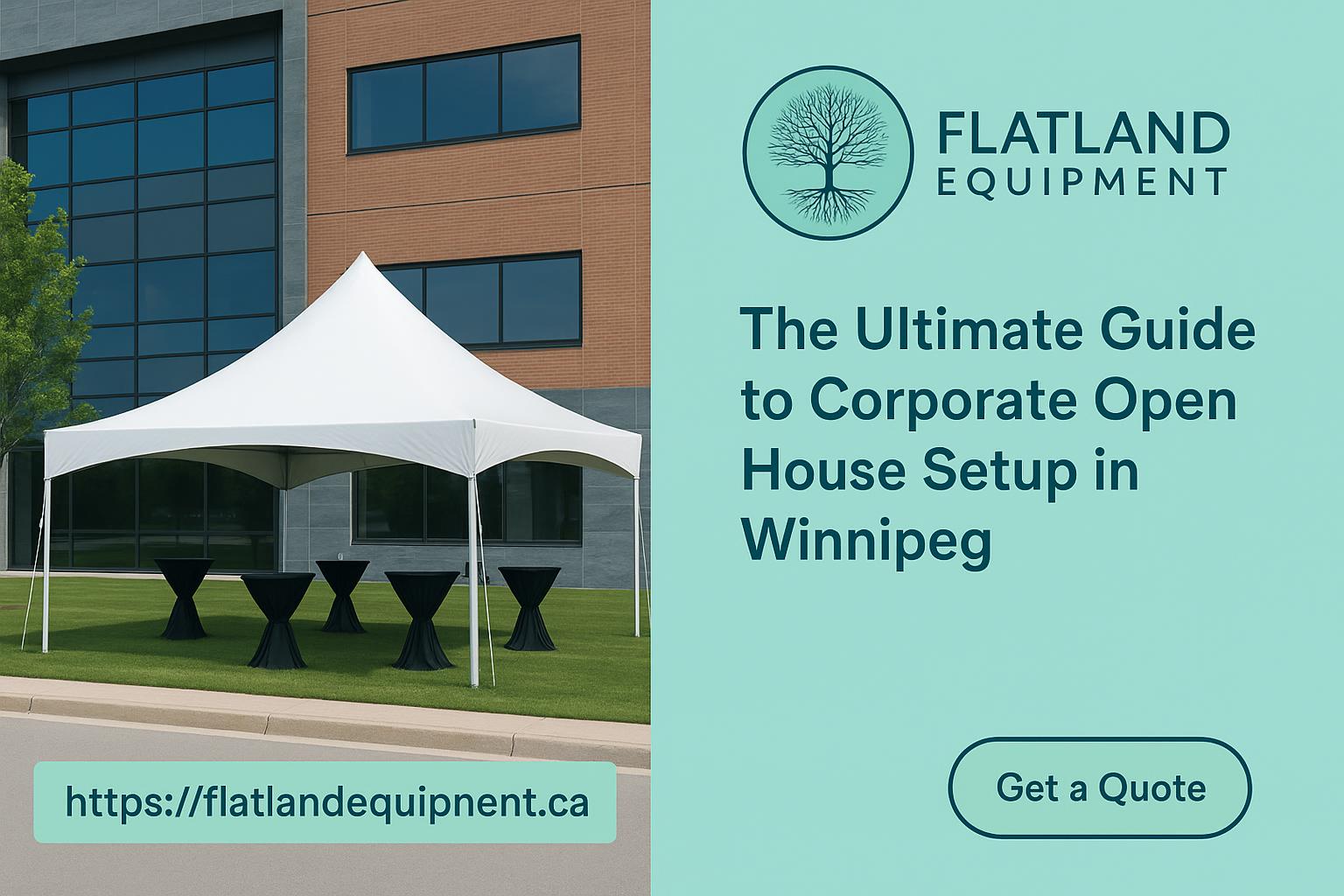
In Manitoba, covered space is not just for rain. It is for wind, sun glare, spring melt, and temperature swings. A tent also gives you a defined “event room” that feels intentional, branded, and comfortable.
Flatland Equipment supports corporate events with professional tent rentals in Winnipeg, including options that fit parking lots, yards, and mixed-use sites. The right tent choice comes down to guest count, what goes under cover, and how the space needs to feel.
Quick capacity guidance for planning
- Standing reception: plan about 6 to 8 square feet per person
- Mixed standing and light seating: plan about 10 to 12 square feet per person
- Seated presentation or meal seating: plan about 12 to 15 square feet per person
These ranges help you avoid the two most common issues: a tent that feels cramped, or a tent that feels empty and hard to heat. A good layout balances comfort with energy.
What to cover vs. leave open
- Cover check-in, food service, and any scheduled presentations.
- Cover high-value equipment displays if weather could affect them.
- Keep some open-air zones for demos that require ventilation or extra clearance.
Furniture and layout essentials that make the event feel corporate
Most guests judge professionalism in the first minute. The fastest way to elevate your open house is to make it feel organized and comfortable: defined spaces, proper seating, and clean lines.
Consider event-ready corporate event furniture that matches your brand tone and the pace of the event.
Practical furniture checklist
- Welcome tables for check-in and information
- High-top cocktail tables to encourage mingling
- Boardroom tables and chairs for partner meetings or HR conversations
- Lounge seating to slow the pace and keep VIP guests comfortable
- Table linens and simple decor to pull the look together
Layout rules that work on almost any site
- Place check-in where it is visible from the entry path.
- Keep the food line wide and away from doorways.
- Create at least one quiet zone for real conversations.
- Put your biggest draw deeper inside the space to improve flow.
Power, lighting, and AV: the details that prevent day-of chaos
Many corporate open houses happen in lots or yards where power access is limited. Even indoor events often need extra circuits for coffee service, sound, monitors, or demo equipment. The goal is simple: stable power, safe cable routing, and lighting that looks good on camera.
Typical power and AV needs
- PA system and microphones for short speeches and announcements
- Presentation screen or TV displays for loops and product videos
- Extension and distribution planned for food service, warmers, and coffee stations
- Task lighting for check-in, signage, and pathways
If you need outdoor support, plan for generator-backed power with proper distribution and cable protection. Keep cables off walkways or cover them with cable ramps where traffic crosses.
Safety, compliance, and crowd control in Manitoba conditions
A great open house feels relaxed because the safety plan is already handled. Whether you are hosting 40 guests or 400, basic controls protect your visitors, your team, and your property.
Open house safety essentials
- Clear access routes for emergency vehicles
- Marked exits and unobstructed aisles under tents and indoors
- Fire extinguisher placement and safe heater clearances if used
- Trip hazard prevention: cable ramps, matting, and tidy transitions
- Defined vehicle and pedestrian separation
For parking and entry control, use dedicated tools like traffic control rentals for Winnipeg events to keep movement predictable and professional. It also helps staff feel confident directing guests.
Weather contingency planning for Winnipeg open houses
Winnipeg weather is not something to “watch and hope.” The safest plan is to assume conditions could change and build redundancy into the setup. That does not mean overbuilding. It means choosing equipment and layouts that can adapt quickly.
Common Manitoba weather challenges and solutions
- Wind: choose properly installed, wind-rated tenting and keep sidewalls available if conditions change.
- Cold snaps: plan heaters sized for the covered area and keep doors managed to reduce heat loss.
- Heat and sun: plan fans or airflow options and provide shade near seating.
- Rain and melt: plan drainage paths, avoid low spots, and add flooring or matting where needed.
Practical rule: If guests must walk from parking to the entrance, treat that path like part of the event. A wet or icy approach will be remembered more than your signage.
Logistics: build a setup plan that protects your workday
Many corporate open houses happen on active sites. That means setup and teardown must respect loading schedules, staff parking, noise limits, and tenant access. A clean plan reduces disruption and keeps your operations team onside.
What a smooth logistics plan includes
- Site walk-through to confirm access points, surfaces, and clearance
- Delivery windows that avoid peak business hours when possible
- Defined staging zones for rentals and waste management
- Teardown timing that protects next-day operations
When rentals include tents, fencing, staging, and power support, coordination matters. One organized vendor plan is often simpler than juggling multiple timelines.
Budgeting for cost efficiency and risk reduction
A corporate open house can scale up quickly. The best budgets focus on the items that prevent failure: shelter, power, safety, and guest comfort. Spending a little more on the right infrastructure can prevent expensive last-minute fixes.
Where budgets are commonly wasted
- Over-ordering furniture without a layout plan
- Forgetting power distribution until the week of the event
- Underestimating the need for crowd control at entry and parking
- Skipping weather protection and scrambling to fix it later
Where budgets typically pay off
- Right-sized tenting and a smart floor plan that feels full and energetic
- Lighting that improves safety and makes your brand look sharp in photos
- Defined pedestrian routes that reduce risk and staff workload
If you are comparing quotes, ask what is included: delivery, installation, teardown, ballast requirements, and support on the day of. It is easier to manage risk when the scope is clear.
Multi-day open houses and extended showcases
If your open house runs for more than one day, the planning changes. You are no longer building a “moment.” You are running a small, temporary facility.
Multi-day considerations
- Overnight security and site access control
- Stable power plan with safe shutdown procedures
- Daily cleaning and waste removal so day two looks as good as day one
- Weather checks and adjustments each morning, especially wind and temperature
For multi-day events, it also helps to design the space so high-wear areas are reinforced with matting or flooring and signage remains readable in changing light.
Brand experience: signage, wayfinding, and small details guests remember
Corporate open houses are marketing events, even when they feel casual. Guests should never wonder where to go, where to stand, or what to do next. Clean wayfinding makes everything feel premium.
Easy upgrades that make a big difference
- Directional signage from parking to check-in
- A simple printed map or agenda at welcome
- One “hero” photo spot with strong lighting and branding
- Clear labels for demo stations and tour start points
When the space is laid out with intention, your team can focus on conversations instead of troubleshooting.
Planning timeline: a realistic Winnipeg schedule
Timing depends on season and complexity, but this structure fits most corporate open houses.
6 to 8 weeks out
- Confirm date, guest count range, and primary goals
- Choose the site footprint and rough layout
- Book tenting, furniture, and key infrastructure
3 to 4 weeks out
- Finalize layout, signage plan, and run-of-show
- Confirm power needs and AV requirements
- Plan parking and pedestrian flow
7 to 10 days out
- Lock delivery and install schedule
- Confirm weather plan: sides, heaters, fans, matting, drainage
- Walk through the guest journey from arrival to exit
Event day
- Do a safety sweep before guests arrive
- Assign staff to parking, welcome, and key zones
- Keep pathways clear and adjust flow as crowds shift
Service area
In Winnipeg: St. James-Assiniboia, River Heights, Transcona, Charleswood, Fort Garry, St. Vital, West Kildonan, North Kildonan, Fort Rouge, St. Boniface, Osborne Village, Exchange District, Corydon Village, Tuxedo, Point Douglas, Inkster, Seven Oaks, The Maples, Garden City, Whyte Ridge, Island Lakes, Sage Creek, Bridgwater Forest, Bridgwater Lakes, Bridgwater Centre, South Pointe, Royalwood, Richmond West, River Park South, North Point Douglas.
Surrounding Areas: Headingley, Oak Bluff, La Salle, St. Norbert, Niverville, Birds Hill, East St. Paul, West St. Paul, Stony Mountain, Lockport, Selkirk, St. Andrews, Lorette, Landmark, St. Adolphe, St. Francois Xavier, Sanford, Starbuck, Ile des Chenes.
Need to head out of town with the truck? Just let us know and we will make sure you are good to go.
Make your Winnipeg open house easy, professional, and weather-ready
If you want a corporate open house setup in Winnipeg that looks sharp, handles Manitoba weather, and runs smoothly from setup to teardown, Flatland Equipment is ready to help. Book early to lock in tenting, event furniture, power support, and site logistics with a local team that understands Winnipeg properties and timelines. Reach us at https://flatlandequipment.ca/ or call (204) 819-0551.