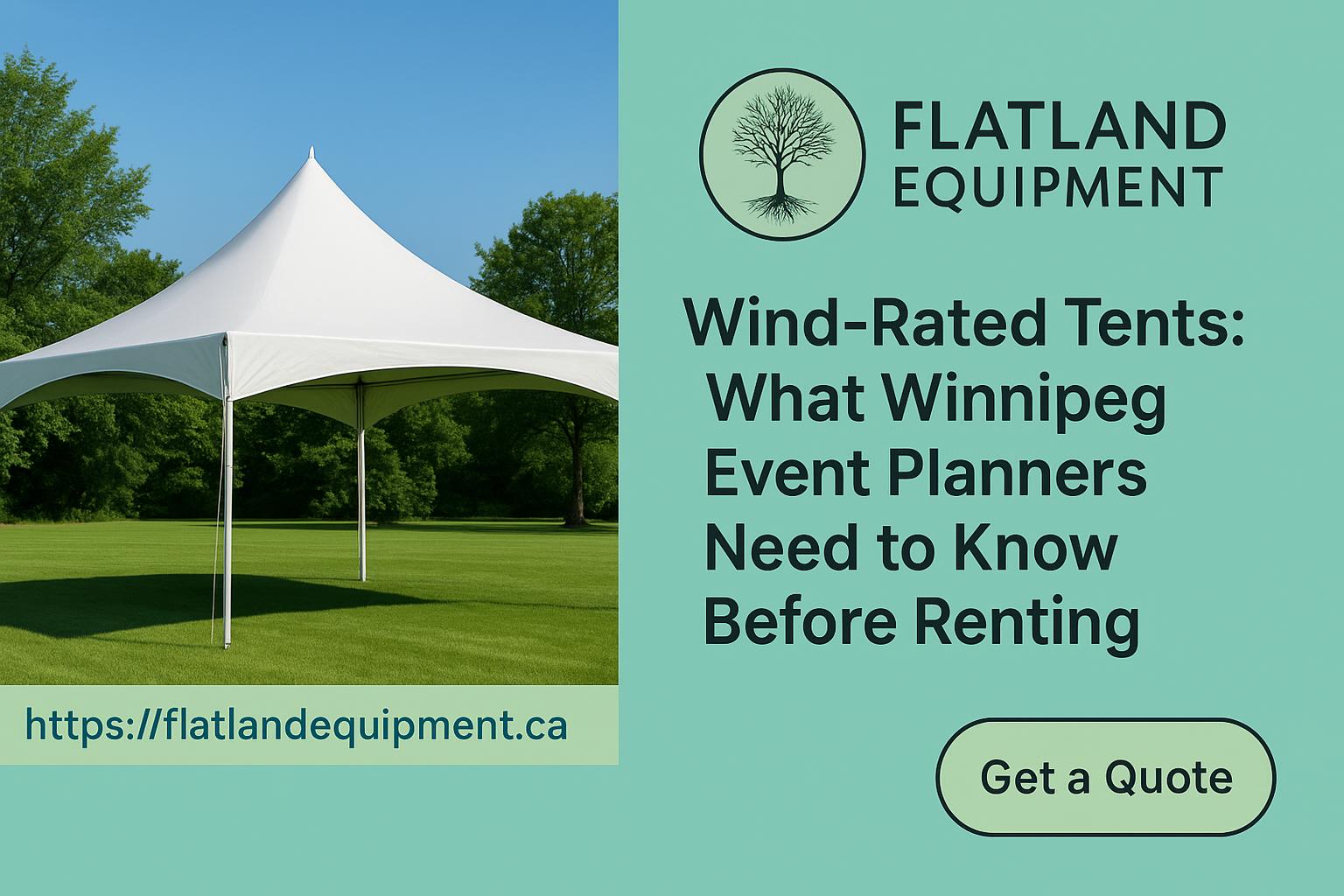
Wind-Rated Tents: What Winnipeg Event Planners Need to Know Before Renting
Winnipeg event planners know the forecast is only part of the story. One hour you have sun, the next you have a prairie gust that makes signage wobble and napkins disappear. That is why wind-rated tents matter. If you are renting a tent for a festival, corporate gathering, community event, or market, choosing a wind-rated tent is one of the simplest ways to protect guests, equipment, and the overall experience.
This guide breaks down what wind-rated means, what questions to ask your rental company, and how to plan a safe tent setup in Manitoba conditions.
Why wind-rated tents matter in Winnipeg
Winnipeg is exposed, flat, and fast-changing. Wind can accelerate across open parks, river corridors, and parking lots, especially near large open spaces like The Forks area, Kildonan Park, Assiniboine Park, and industrial or commercial lots around Inkster, Transcona, and St. James.
A wind-rated tent helps you manage four major risks:
Guest safety
A properly rated and properly anchored tent is designed to stay stable as winds increase. This reduces the risk of a tent shifting, lifting, or collapsing during a gust.
Event continuity
When wind hits mid-event, you want a setup that holds. A wind-rated tent helps you avoid sudden shutdowns, rushed evacuations, or last-minute layout changes.
Protection for rentals and vendor gear
Tables, chairs, linens, sound equipment, catering stations, and vendor displays are expensive and vulnerable. A stable structure lowers the chance of damage and keeps the event running smoothly.
Aesthetics that stay photo-ready
Decor is only impressive if it stays in place. A tent that stays tight, square, and secure keeps your event looking professional for those key photo moments.
What “wind-rated” actually means
Wind-rated means the tent system has been designed and tested to perform up to a specified wind speed when installed correctly. That last part matters: wind rating depends on the full system being used as intended, including frame, fabric, anchoring, and site conditions.
A few important clarifications for planners:
Wind rating is not just the canopy
The structure, connectors, and anchoring method are part of the rating. A strong top on a weak frame is not a safe setup.
Wind rating assumes proper anchoring
A tent that is rated for higher winds still needs the right anchor plan. Soft ground, asphalt, patios, and turf fields all require different solutions.
There is a difference between “wind resistant” and “wind rated”
Some products are marketed as “wind resistant” without tested performance. For events, ask for the actual rating and the setup requirements.
Common Winnipeg wind realities to plan for
You do not need to be a meteorologist to plan well, but you do need to account for local conditions:
Gusts can be more important than average wind speed
Forecasts often show sustained wind, but gusts are what cause sudden stress on a tent. Plan for gust potential, not just the steady number.
Wind direction can change quickly
A sheltered site can become exposed if the wind shifts. If your venue is near open fields, riverbanks, or wide parking areas, expect changes.
Temperature swings impact comfort planning
Wind plus cool temperatures can make a tent feel much colder than expected, even in spring and fall. Sidewalls and heaters can turn a “tough it out” event into a comfortable one.
Rain and wind together increase load and movement
Wet fabric and repeated gusts create more strain on seams and anchors. That is another reason to prioritize commercial-grade equipment and correct installation.
How to choose the right wind-rated tent for your event
Start with the event format, the venue surface, and the guest experience you want. Then match that to a tent style and anchoring plan that makes sense for Winnipeg.
1) Pick the right tent size (and do not under-size)
Tent size depends on what happens inside the tent, not just how many people will be nearby. A few general planning guidelines:
Standing cocktail-style events need less space per person than seated meals
A seated dinner, head table, buffet line, and dance floor require significantly more square footage than a casual mingle setup.
Add space for vendors, staging, and access
If you have a DJ, small stage, photo booth, bar, buffet, or vendor booths, factor that in early.
Plan for clearance and layout flow
Tents should allow comfortable circulation for guests, staff, and accessibility needs, especially if you are hosting in busy areas like Osborne Village, Exchange District, Corydon Village, or St. Boniface where space can be tight.
Flatland rents tent sizes ranging from 10×10 up to larger canopies, with sidewalls available. The best fit depends on your layout, not just the headcount, so it is worth a quick conversation before you book.
2) Understand frame strength and commercial-grade build
Wind performance is heavily influenced by the frame system. When comparing options, ask about:
Frame material and structural design
Commercial-grade frames are designed for repeated use, stronger connections, and better rigidity.
Hardware and connection points
High-stress points matter in gusty conditions. Quality fittings and reinforced design reduce movement and wear.
Fabric quality and tensioning
A properly tensioned top reduces flapping. Flapping fabric is not just noisy, it can create additional stress on the structure.
3) Match anchoring to the surface (this is where many events go wrong)
Anchoring is not optional in Winnipeg. The right anchors depend on where the tent is installed:
Grass, turf, and soil
Stake anchoring can work well when soil conditions allow. Depth, soil composition, and underground obstacles all matter.
Asphalt and concrete
Weighted anchoring systems are typically required when staking is not possible. This is common for parking lots, loading areas, and hardscaped venues.
Patios, pavers, and mixed surfaces
These sites need a careful plan to avoid damage and ensure stability. Do not assume “a few weights” is enough. The anchor plan should match the tent size and expected conditions.
If your venue is in areas like Bridgwater, Sage Creek, South Pointe, or Whyte Ridge where yards and green spaces vary widely, a quick site check can save a lot of trouble later.
4) Decide if you need sidewalls, doors, or heaters
Sidewalls are not just for rain. In Winnipeg, they can also reduce wind impact inside the tent and improve comfort. Consider sidewalls if:
Your event runs in spring or fall
Even mild temperatures can feel cold in wind.
You have decor, catering, or AV equipment that needs protection
Wind-blown dust, drizzle, and temperature drops can impact performance and food quality.
You need a more controlled look
Sidewalls can make the space feel more finished and private, especially for corporate events or ticketed experiences.
If you add heaters, confirm ventilation and placement requirements with the rental provider and keep clearances around fabric and walls.
Winnipeg event scenarios where wind rating matters most
Festivals and community events
Large public events often take place in open areas with wide wind exposure. Wind-rated tents help keep info booths, first-aid stations, and shaded rest areas stable and reliable.
Corporate gatherings and client-facing events
Brand perception matters. A stable, clean, well-installed tent looks professional and prevents last-minute disruptions.
Markets, vendors, and pop-ups
Vendor canopies and booths are vulnerable when gusts pick up. A wind-rated tent setup helps vendors stay open, protects products, and keeps foot traffic comfortable.
Sports tournaments and outdoor ceremonies
From check-in areas to awards tables, tents often act as the operational hub. If the tent fails, the whole event gets harder to run.
What to ask before you rent a wind-rated tent
Use these questions to avoid vague answers and make sure you are renting the right setup:
What is the tent’s wind rating, and under what installation conditions does it apply?
A rating should be tied to a specific setup method, not just a marketing claim.
What anchoring method will be used at my venue surface?
Get clarity on stakes vs weighted anchoring, and whether the site can support the plan.
Do you recommend sidewalls for my location and time of year?
This affects comfort and interior wind.
What is your weather policy if the forecast changes?
Winnipeg weather shifts quickly. Understand decision points and options.
Can you help with a site visit or layout plan?
A site check can catch exposure issues, underground lines, or space constraints.
Pro planning tips for a smooth Winnipeg tent rental
Book earlier than you think
Summer weekends fill fast, and major community weekends can book out across the city. Secure your tent as soon as you have a date and venue.
Watch the forecast, but plan for gusts
Keep an eye on Environment and Climate Change Canada updates leading up to the event. Also consider local terrain exposure, because one site can be calm while another is windier.
Build a wind-aware floor plan
Avoid placing lightweight decor at tent edges. Secure signage, confirm balloon and banner plans, and keep emergency exits clear.
Do not DIY safety checks right before guests arrive
A tent should be installed correctly from the start. Last-minute adjustments under time pressure increase risk.
Pair your tent with the right essentials
Consider tables, chairs, and other event rentals at the same time so everything is sized and delivered together. A coordinated plan reduces day-of stress.
Flatland’s approach to wind-rated tent rentals
Flatland Equipment supports Winnipeg events with corporate-grade rental equipment and a system built for reliability. Our tents are cleaned and inspected through a proprietary multi-stage cleaning and inspection process, so your setup arrives looking sharp and ready for guests.
We can help you choose a size from 10×10 up to larger canopy setups, and we offer sidewalls when you need extra wind and weather protection. Pickup or delivery options are available to match your timeline, and our team can help you think through layout, exposure, and practical event flow.
If you are still in early planning, you may also find it helpful to read related guides like “How to Choose the Right Tent Size for Your Event” or “Outdoor Event Checklist for Manitoba Weather” on our site.
Service areas
Serving Winnipeg and surrounding communities.
In Winnipeg: St. James-Assiniboia, River Heights, Transcona, Charleswood, Fort Garry, St. Vital, West Kildonan, North Kildonan, Fort Rouge, St. Boniface, Osborne Village, Exchange District, Corydon Village, Tuxedo, Point Douglas, Inkster, Seven Oaks, The Maples, Garden City, Whyte Ridge, Island Lakes, Sage Creek, Bridgwater Forest, Bridgwater Lakes, Bridgwater Centre, South Pointe, Royalwood, Richmond West, River Park South, North Point Douglas.
Surrounding Areas: Headingley, Oak Bluff, La Salle, St. Norbert, Niverville, Birds Hill, East St. Paul, West St. Paul, Stony Mountain, Lockport, Selkirk, St. Andrews, Lorette, Landmark, St. Adolphe, St. Francois Xavier, Sanford, Starbuck, Ile des Chenes.
Final call to action
Ready to lock in a wind-rated tent for your Winnipeg event? Call Flatland Equipment at (204) 819-0551 or book online at https://flatlandequipment.ca/ to reserve your date.