Flatland Equipment Calls on Winnipeg Businesses and Landlords to Prepare for the Future of Organics Diversion
Why Wait Until Organics Diversion Is Mandatory? Flatland Calls on Winnipeg Businesses to Start Now.
Other Canadian jurisdictions already restrict organics from landfill. Flatland says Winnipeg businesses should not wait until change is mandatory.
WINNIPEG, Manitoba — September 2026 — Flatland Equipment’s Sustainability Division is calling on Winnipeg businesses, commercial landlords and property managers to begin preparing now for a future in which organics diversion becomes a normal part of commercial waste management.
Across Canada, communities are increasingly moving away from sending food and organic material to landfill.
In Metro Vancouver, for example, food scraps have been banned from disposal as garbage at regional waste facilities since 2015. The policy applies to residential and commercial waste, and businesses including restaurants, grocers, and floral operations are expected to separate appropriate organic material from regular garbage.
Flatland believes Winnipeg should be looking at the same question:
Why wait until businesses are forced to change?
“Other jurisdictions have already shown us where waste management is heading,” said Odin Zavier of Flatland Equipment. “We have an opportunity in Winnipeg to start making this transition voluntarily, thoughtfully and affordably instead of waiting until businesses suddenly have to comply with new requirements.”
Winnipeg Already Recognizes the Problem
The City of Winnipeg currently operates food-waste drop-off locations and is planning toward a broader Green Cart organics collection program.
The City also states that diverting food waste from landfill has a significant climate benefit. According to Winnipeg, every tonne of food waste kept out of landfill prevents approximately two tonnes of carbon-dioxide-equivalent emissions from entering the atmosphere.
The reason is largely methane.
When food and other organic material decompose in a landfill without oxygen, they generate methane, a powerful greenhouse gas. Separating and properly processing organics avoids much of that landfill impact. Metro Vancouver cites the same environmental reason for its organics disposal restrictions.
Businesses May Be Willing. Their Properties May Not Be Ready.
As Flatland has begun speaking with Winnipeg businesses about organics diversion, it has identified another challenge.
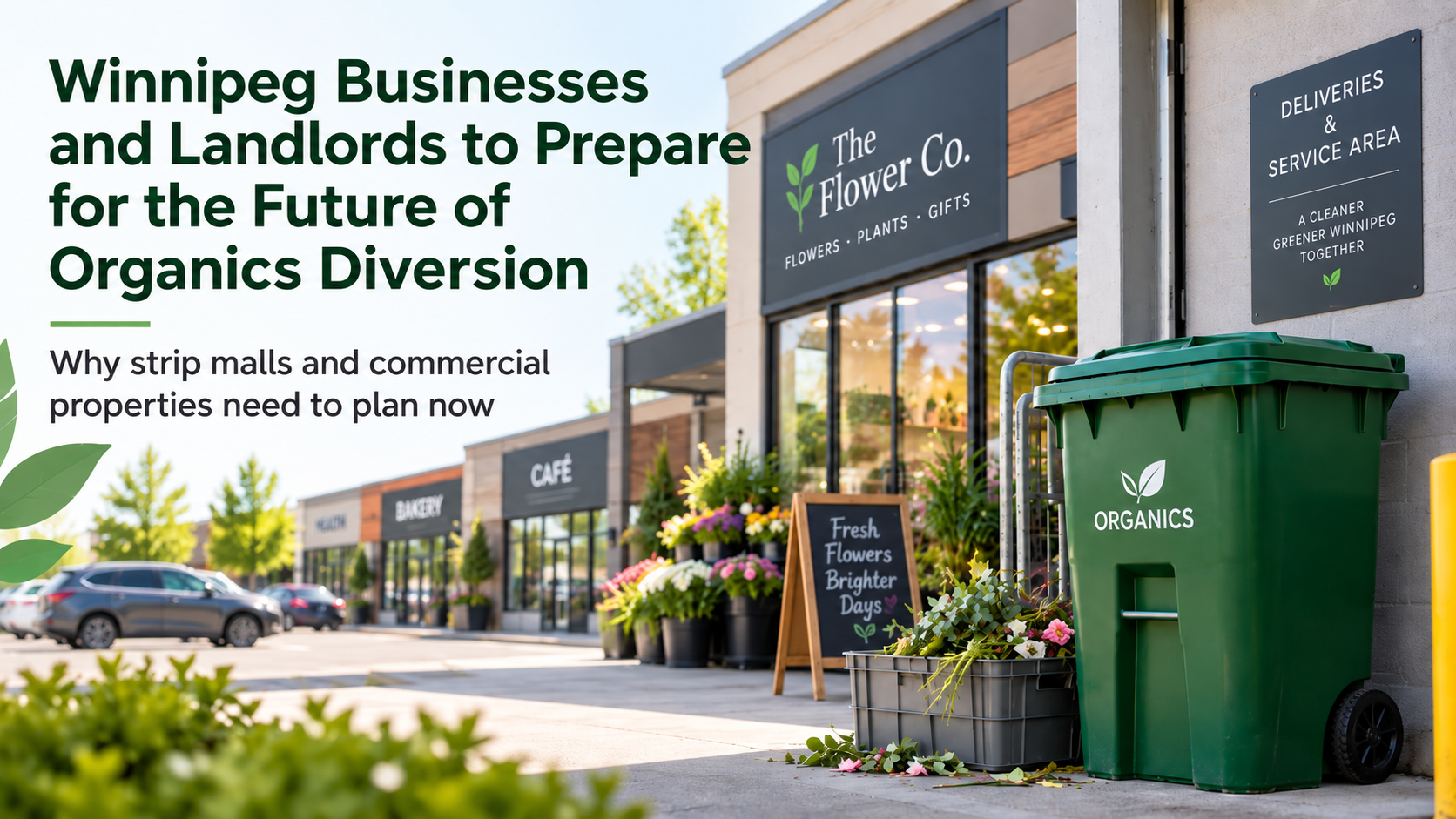
Many commercial tenants do not control their own garbage and recycling areas.
Even when a business wants to participate, it may first need permission from a landlord or property manager to place an organics cart on the property.
That is particularly common in strip malls and multi-tenant commercial developments.
“We’re finding that sometimes the business is willing, but the property hasn’t been designed or organized for a third waste stream,” Zavier said. “That is exactly why landlords need to start thinking about this now.”
Flatland says commercial property owners should begin asking:
- Is there space for an organics cart?
- Could one cart serve one or several tenants?
- Should the cart be locked?
- Who would be responsible for collection?
- How could organics fit alongside garbage and recycling?
- What policy should be in place when tenants begin asking?
It Does Not Require a Major Infrastructure Project
Flatland says one misconception is that organics diversion requires a large commercial dumpster or major changes to the property.
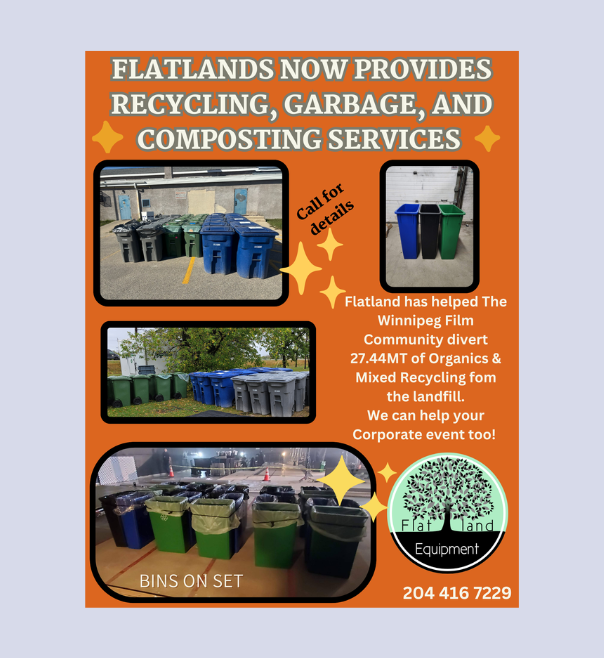
In many cases, it may require only a 160-litre wheeled organics cart and a suitable place to put it.
The cart can be clearly marked, kept closed and locked where required.
Flatland’s approach is to start small, determine the actual volume being generated and establish a collection schedule based on real need.
“We’re not asking every business to install a huge system,” Zavier said. “We’re asking them to give us a small amount of space and the opportunity to see what can actually be diverted.”
Flatland Is Advocating for Voluntary Action Before Regulation
Flatland believes Winnipeg has an opportunity to learn from jurisdictions that have already introduced organics restrictions.
Metro Vancouver did not move directly from traditional garbage collection to full enforcement overnight. The region consulted industry, developed collection and processing capacity, introduced a grace period and gradually implemented enforcement.
Flatland says Winnipeg businesses and property owners can take the same proactive approach.
“The ideal situation is not to wait for someone to tell us we have to do this,” Zavier said. “The ideal situation is that businesses, landlords, waste companies and the community begin building the system because it makes sense.”
A Complimentary Two-Week Starting Point
As part of that effort, Flatland Equipment is offering Winnipeg businesses a complimentary two-week organics diversion trial.
Flatland supplies the collection cart and works with the business to determine:
- where the cart can be placed;
- how much eligible organic material is generated;
- how often it needs to be collected;
- whether landlord approval is required; and
- whether an ongoing program makes practical and financial sense.
There is no obligation to continue after the trial.
Flatland is also prepared to speak directly with landlords and property managers when permission is required.
A Question for Winnipeg Businesses
Flatland is asking business owners one simple question:
If organics diversion eventually becomes standard practice in Winnipeg, why not learn how it works now?
And for commercial landlords:
If your tenants begin asking for organics collection, will your property be ready?
“We know where this is heading because other Canadian communities are already there,” Zavier said. “Our goal is to help Winnipeg businesses get ahead of it, one cart and one property at a time.”
About Flatland Equipment
Flatland Equipment is a Winnipeg-based company serving businesses and organizations throughout the region.
Through its Sustainability Division, Flatland is developing practical organics diversion and recycling programs designed to reduce the amount of reusable and compostable material entering the regular garbage stream.
Flatland’s organics initiative developed through work with the Directors Guild of Canada and is now being expanded to Winnipeg businesses and commercial properties.
Media and Partnership Inquiries
Flatland Equipment
Sustainability Division
(204) 416-7229