Planning Waste Streams for Large Corporate Gatherings in Winnipeg
Large events create waste fast – and when the crowd is corporate, expectations are higher. If you are coordinating a conference, staff appreciation day, holiday party, multi-site training, or a public-facing brand event, corporate garbage removal in Winnipeg needs to be planned like any other critical system: clear routes, clear responsibilities, and the right equipment in the right places.
Flatland Equipment helps Winnipeg event teams reduce mess, stay compliant, and keep your site looking professional from first guest arrival to final load-out. We supply bins and site gear, support recycling, and help you set up a waste-stream plan that makes sense for Manitoba venues and weather. ✅
Why waste-stream planning matters at corporate events
Waste is one of the easiest things to underestimate. It is also one of the first things guests notice when it goes wrong. Overflowing bins, loose cardboard, windblown cups, and unclear recycling rules can quickly create safety issues and reputational risk.
A solid waste plan supports:
- Cleanliness and guest experience (no overflowing stations, no odours, no clutter)
- Safety and risk reduction (less slip-and-trip risk, fewer sharp items left behind)
- Compliance and documentation (especially for larger venues, public spaces, and contracted sites)
- Smoother logistics for your team (less time reacting, more time running the event)
- Better diversion results (recycling that actually gets used correctly)
Whether you are managing a ballroom downtown, a warehouse floor, a parking-lot activation, a film set, or a multi-day indoor-outdoor program, your waste stations are part of operations. Treat them like it. 👍
Start with a simple waste-stream forecast
Before you rent a single bin, forecast what you will generate. Corporate events typically produce a predictable mix. A quick forecast keeps costs under control and reduces last-minute scrambling.
Common corporate event waste streams
- Food waste and organics: catering prep, plate scraps, compostables where applicable
- Landfill garbage: mixed waste, contaminated packaging, bathroom waste
- Recycling: bottles and cans, clean paper, cardboard, select plastics depending on your program
- Special items: pallets, shrink wrap, event signage, lanyards, batteries, e-waste (for tech-heavy events)
- Outdoor debris: windblown paper, cigarette waste, mud-caked packaging, snow-melt grit
Even if you are not running an organics program, forecasting food-related waste is critical because it is heavy, messy, and the first to create odour if bins are undersized or too far away.
Questions that sharpen your forecast
- How many people per day, and what time peaks (coffee breaks, lunch, evening social)?
- Seated meal, boxed lunch, buffet, or grab-and-go? Packaging changes everything.
- Will alcohol be served (more cans, bottles, and breakage risk)?
- Is there a load-in build with pallets, cardboard, and wrap?
- Indoor-only, outdoor-only, or hybrid?
- How many entrances, floors, or zones need stations?
If you want help translating those answers into bin counts and placements, Flatland can walk through it with your planner, facilities team, or operations lead.
Right-size your equipment: bins, cans, and event cleanup essentials
Once you know your waste streams, choose equipment that matches your footprint, crowd behaviour, and staffing. Flatland Equipment supports corporate waste management with practical, event-tested gear that works for Winnipeg venues and Manitoba weather.
Core equipment for corporate gatherings
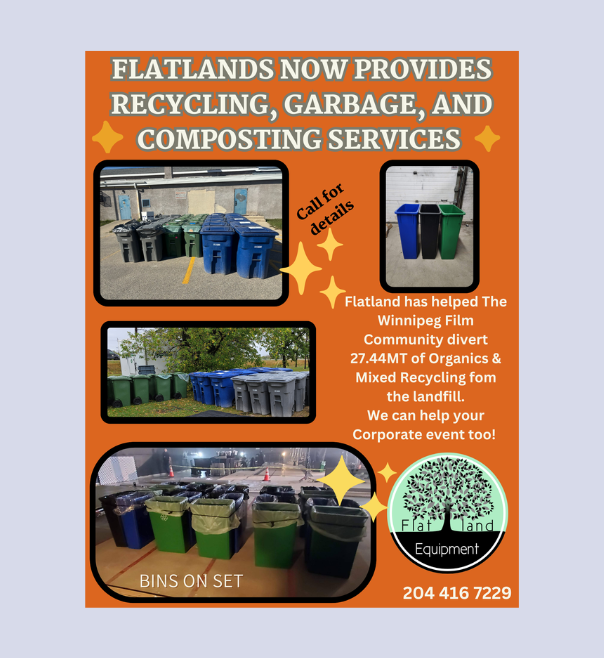
- Garbage cans for event stations and high-traffic areas
- Recycling bins for events in Winnipeg (paired with clear signage)
- Galvanized pails for maintenance points, wet waste, or utility needs
- Butt buckets for designated smoking areas (key for keeping entrances clean)
- Garbage pickers for fast floor sweeps and safe collection
We also carry site support items that help your plan run smoothly, including traffic control tools, safety gear, and practical accessories that reduce hazards during peak foot traffic.
Placement matters more than most people think
Most bin problems are not bin problems. They are placement problems.
- Put stations where people naturally pause: outside washrooms, near coffee, at exits, beside registration, near elevators
- Pair garbage and recycling together to reduce “wish-cycling” and contamination
- Use consistent station layouts throughout the venue so guests do not have to relearn the rules
- Keep stations visible, not hidden behind plants, pipe-and-drape, or signage walls
For outdoor zones, plan for wind and precipitation. If it can blow away or soak through, assume it will.
Design your station setup for easy sorting (and fewer mistakes)
Recycling only works when it is easy. If guests need to guess, your diversion rate drops and contamination goes up.
Make sorting obvious
- Clear labels with simple visuals and plain language
- Limit the number of categories if staffing is light
- Match signage to what is actually accepted in your program
- Use consistent colours and the same station design across zones
For corporate events, we often recommend a simple two-stream approach in public areas (garbage and recycling), then handle any additional sorting in a back-of-house consolidation area where your team can control it.
Back-of-house consolidation is your secret weapon
Instead of trying to educate every guest on every item, use a controlled staging point where staff can:
- Break down cardboard and keep it dry
- Bag garbage and tie off before it leaks
- Remove contamination from recycling before it becomes a bigger problem
- Track fill levels and schedule swaps or pickups
This is especially valuable for multi-day conferences, trade shows, and larger corporate gatherings where build-out and tear-down generate as much waste as the event itself.
Compliance, safety, and risk reduction for corporate event sites
Corporate events are often managed by committees: HR, operations, facilities, safety, and sometimes external agencies. Waste planning supports each group by reducing hazards and keeping the site orderly.
Safety basics that protect your team and your guests
- Keep walking paths clear and do not let bags pile up in hallways or near exits
- Use gloves and appropriate PPE for staff handling waste
- Plan separate routes for waste movement to reduce collisions with guest flow
- Schedule bin servicing before peak breaks to avoid overflow
If your venue requires permits, signage, or specific handling rules, plan that early. A great event is one where nobody notices the waste system because it just works.
Winnipeg and Manitoba weather planning (yes, even in fall and winter)
Manitoba weather is not a detail. It is a variable that can change your entire waste workflow in a few hours.
Rain, slush, and early snow: what to plan for
- Use lined bins and keep spare liners on-site
- Protect cardboard from moisture so it stays recyclable
- Anchor or position stations to reduce wind scatter
- Plan mud and slush control near entrances (wet waste weighs more and leaks faster)
- Allow extra time for servicing stations during precipitation
For multi-day events, weather shifts are common. A dry day-one can turn into a wet day-two. Build a buffer into your servicing schedule and keep extra bags and collection tools ready.
Multi-day corporate events: servicing schedules and staffing
Multi-day gatherings require a different mindset than single-evening events. The goal is to stay ahead of volume and avoid “morning-after surprises” in public areas.
Build a servicing plan by time blocks
- Pre-open sweep: check all stations, replace bags, reset signage, remove overflow
- Peak-period monitoring: coffee breaks, lunch, and end-of-day exits
- End-of-day consolidation: move waste to staging, break down cardboard, prep for day two
Even with great bin placement, you need a realistic plan for who empties what, when, and where it goes. If you want your internal team focused on guests and programming, Flatland can support the cleanup flow with the right equipment and practical planning.
Budgeting corporate waste management without cutting corners
Budgeting is easier when the plan is structured. The biggest cost drivers are usually volume, servicing frequency, and last-minute add-ons.
Ways to control cost while keeping standards high
- Right-size the number of stations based on traffic patterns, not just headcount
- Use a back-of-house consolidation point to reduce public-area servicing time
- Keep recycling clean to avoid rejected loads and extra handling
- Plan build and tear-down waste separately from guest-time waste
Flatland focuses on practical recommendations that fit your event, your site, and your timeline. You get the coverage you need without paying for equipment that does not match the plan.
Integrating waste planning with your overall event logistics
Waste planning should be integrated into your layout, not tacked on at the end. When you map your registration, catering, breakout rooms, and brand activations, map your stations too.
Coordinate with these teams early
- Venue or facility management (loading routes, staging locations, storage rules)
- Catering (packaging types, timing, back-of-house access)
- AV and production (crates, batteries, cable ties, packaging)
- Security and safety (crowd flow, restricted areas, emergency egress)
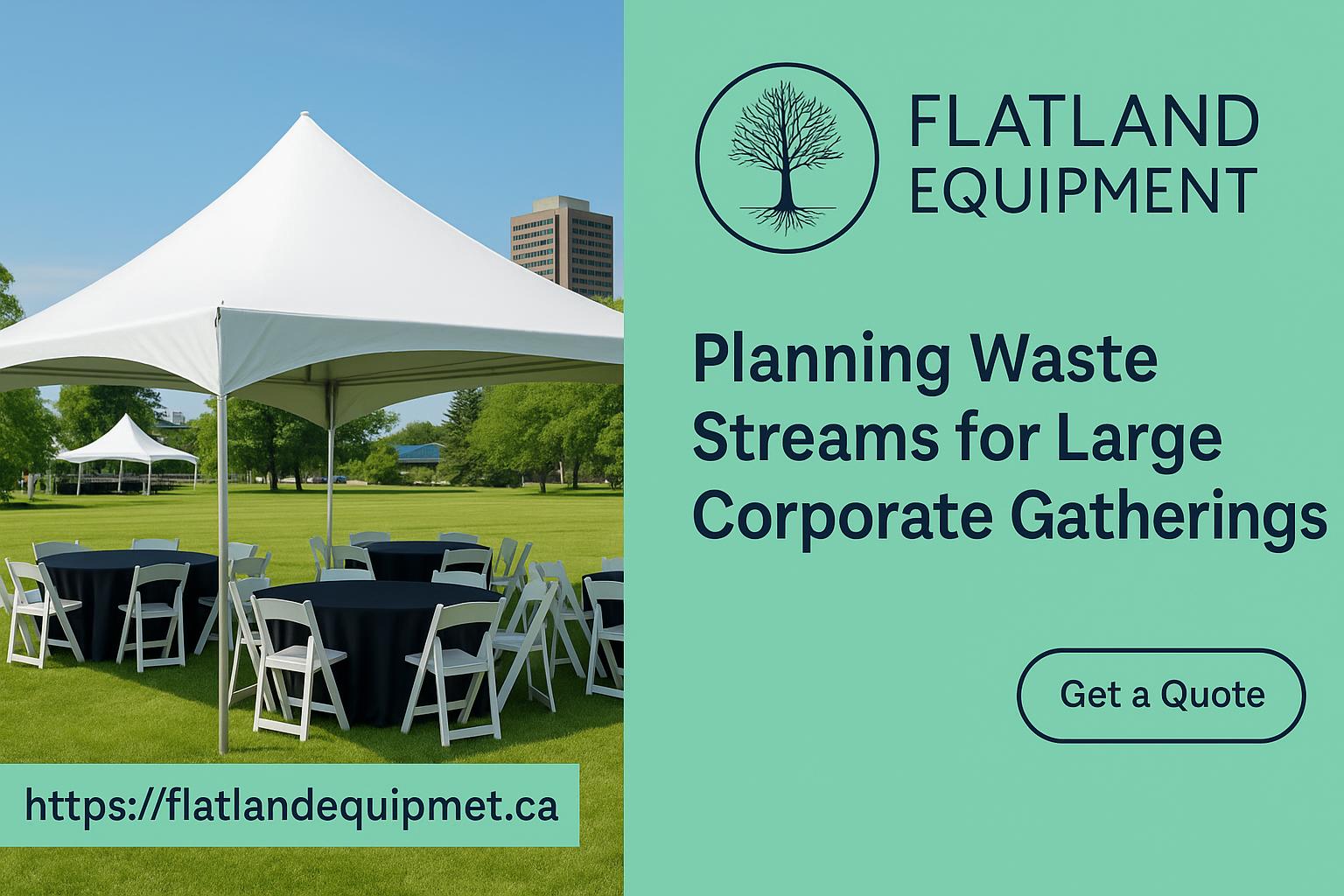
If your event includes an outdoor footprint, tenting often changes traffic patterns and waste volume. Flatland is also known for tent-rental expertise, so your waste stations can be planned alongside your covered areas, entrances, and guest flow. For a full setup, see our Corporate Tent Rentals page on our website.
Common planning mistakes (and how to avoid them)
Mistake 1: Too few stations in high-traffic zones
Guests will not walk across the venue to find a bin. Put stations where the traffic is, then service them regularly.
Mistake 2: Recycling that is technically available but practically unusable
If the signage is unclear or the bin is separated from garbage, contamination rises. Pair stations and keep instructions simple.
Mistake 3: Ignoring build-out waste
Cardboard and wrap from deliveries can exceed guest-time waste. Plan for both phases.
Mistake 4: No weather contingency for outdoor areas
Wind and precipitation increase litter and weight. Plan for anchoring, extra liners, and more frequent checks.
Service area: Winnipeg and surrounding communities
Flatland Equipment supports corporate events across Winnipeg and nearby areas, including St. James-Assiniboia, River Heights, Transcona, Charleswood, Fort Garry, and communities like Headingley, Oak Bluff, and Selkirk. Heading out of town with the truck? Let us know and we will help ensure you are set up properly for the site and schedule.
Meta information
Meta Title: Corporate Garbage Removal Winnipeg – Event Waste Planning
Meta Description: Plan corporate event waste streams in Winnipeg. Bin rentals, recycling support, weather-ready setups, and clean site flow from Flatland Equipment.
Call to action
Ready to lock in a clean, compliant, guest-friendly waste plan for your next corporate gathering? Contact Flatland Equipment for corporate garbage removal in Winnipeg, recycling support, and the right event cleanup gear to keep everything running smoothly. Call 204-416-7229 or visit https://flatlandequipment.ca/.