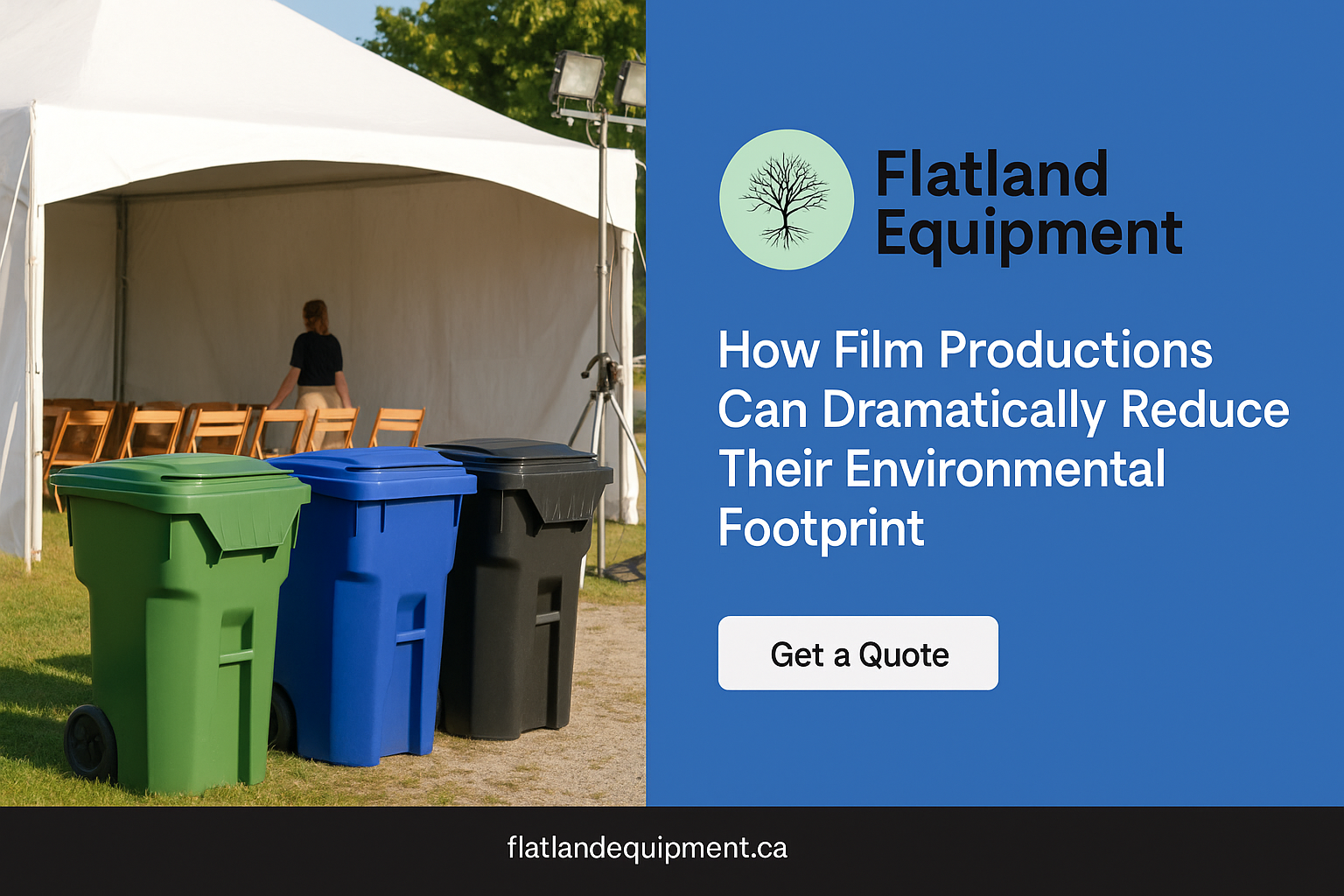
Smarter Waste Management Starts Before the Cameras Roll
Film productions generate a lot of activity.
They also generate a lot of waste.
From set construction and catering to wardrobe, craft services, production offices, and strike days, every department contributes to a production’s environmental footprint.
The good news?
Reducing that impact doesn’t require complicated solutions.
It starts with planning.
A well-organized waste management strategy helps productions stay cleaner, safer, and more efficient while supporting environmental goals at the same time.
For production managers, location managers, safety teams, and municipal partners, sustainable waste management is becoming an essential part of modern production planning.
Why Environmental Planning Matters on Film Sets
A busy film set can produce significant amounts of waste in a very short period of time.
Without a plan, that waste can create:
❌ Trip hazards
❌ Overflowing garbage stations
❌ Contaminated recycling
❌ Increased labour costs
❌ Site cleanup challenges
❌ Poor public perception
❌ Unnecessary environmental impact
The most successful productions don’t wait until wrap day to think about cleanup.
They build waste management into the production plan from the beginning.
Sustainability Doesn’t Need to Be Complicated
Many productions want to operate more sustainably.
The challenge is implementing systems that actually work.
The best sustainability programs focus on simple improvements that crews can easily follow.
That often includes:
✔ Clearly marked waste stations
✔ Accessible recycling bins
✔ Designated smoking disposal areas
✔ Regular site maintenance
✔ Consistent servicing schedules
When systems are easy to use, participation naturally improves.
The Right Equipment Makes a Big Difference
Good intentions only go so far.
Productions need practical equipment that supports day-to-day operations.
A successful waste management plan often includes:
🗑 Garbage cans
♻ Recycling stations
🪣 Galvanized pails
🚬 Butt buckets
🧹 Garbage pickers
Each plays an important role in maintaining a clean and organized production environment.
🗑 Garbage Cans
Garbage cans should be positioned where waste is naturally generated.
Popular locations include:
✔ Craft services
✔ Production offices
✔ Crew holding areas
✔ Base camps
✔ Loading zones
✔ Parking areas
Convenience encourages proper use.
♻ Recycling Stations
Recycling is most effective when stations are clearly identified and easy to access.
Common recyclable materials include:
✔ Bottles
✔ Cans
✔ Cardboard
✔ Packaging materials
✔ Paper products
Simple station layouts help improve participation and reduce contamination.
🪣 Galvanized Pails
These durable containers work well in:
✔ Construction zones
✔ Utility areas
✔ Equipment staging locations
✔ Vendor support areas
They provide practical solutions for high-use environments.
🚬 Butt Buckets
Smoking areas require proper planning.
Dedicated disposal stations help:
✔ Reduce litter
✔ Improve site appearance
✔ Support safety objectives
✔ Lower fire risks
Small details often have a significant impact.
🧹 Garbage Pickers
Perimeter cleanup is often overlooked.
Garbage pickers help crews:
✔ Maintain site appearance
✔ Remove windblown debris
✔ Improve cleanup efficiency
✔ Support public-facing locations
They are especially valuable on larger outdoor productions.
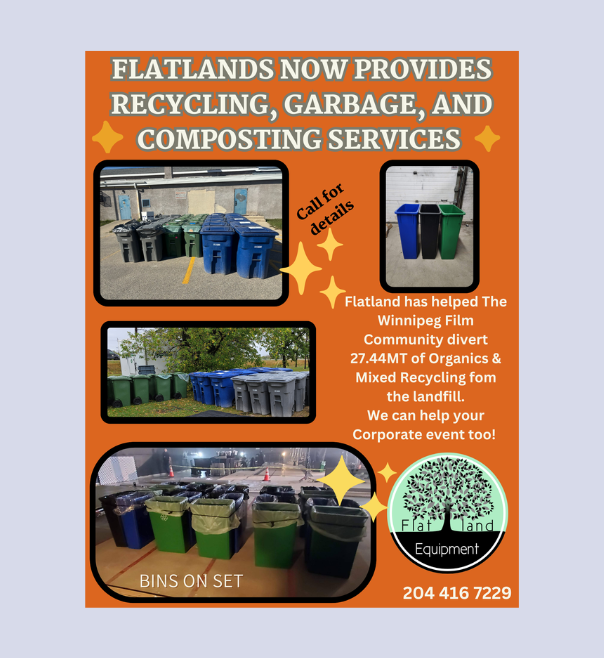
Recycling and Composting Can Work on Film Sets
Many productions assume recycling and composting programs are difficult to manage.
In reality, they work best when they are simple.
The key is placement.
Waste stations should be located where waste is actually generated.
That means:
🍽 Near catering stations
🎬 Near crew gathering areas
📦 Near staging zones
🚚 Near loading and unloading areas
The easier it is to participate, the more successful the program becomes.
Winnipeg Weather Creates Additional Challenges
Manitoba weather can change quickly.
A calm morning can become:
🌧 Rainy
🌬 Windy
❄ Cold
within a matter of hours.
Weather affects waste management more than many productions realize.
Wind can scatter loose materials.
Rain can saturate cardboard and overflow bins.
Snow and freezing conditions can create additional cleanup challenges.
Planning for weather helps reduce disruption and protect site conditions.
Safety and Waste Management Go Hand in Hand
Waste management is also a safety issue.
Overflowing bins.
Blocked walkways.
Improperly placed disposal stations.
All of these can increase risk.
That’s why cleanup planning should work alongside:
🚧 Traffic control planning
🦺 Safety programs
🚶 Pedestrian flow management
🚚 Vehicle movement plans
📍 Site signage
A cleaner site is typically a safer site.
Multi-Day Productions Require Ongoing Support
A one-day commercial shoot has different requirements than a six-week television production.
Longer projects often benefit from:
✔ Scheduled servicing
✔ Ongoing waste collection
✔ Recycling management
✔ Daily site maintenance
✔ Flexible support as production needs change
Consistency helps maintain standards throughout the entire production lifecycle.
Better Waste Management Helps Control Costs
Many productions focus on equipment and labour budgets.
Waste management is often overlooked.
However, poor cleanup planning can create:
❌ Emergency hauling costs
❌ Overtime labour
❌ Site restoration expenses
❌ Production delays
❌ Compliance concerns
A structured waste management plan helps reduce those risks while improving operational efficiency.
Why Productions Choose Flatland Equipment
Flatland supports film productions with practical environmental control solutions designed for real-world production environments.
We provide:
✔ Garbage can rentals
✔ Recycling stations
✔ Galvanized pails
✔ Butt buckets
✔ Garbage picker rentals
✔ Site support planning
✔ Flexible service options
✔ Solutions tailored to production schedules
Our goal is simple:
Help productions operate cleaner, safer, and more efficiently.
Supporting Productions Across Winnipeg & Manitoba
Flatland supports:
🎬 Feature Films
📺 Television Productions
📹 Commercial Shoots
🎵 Music Videos
🎥 Documentaries
🎪 Festivals
🏢 Corporate Activations
🏛 Municipal Events
Whether you’re filming downtown Winnipeg, operating from a production compound, or managing multiple locations across Manitoba, we can help support your waste management needs.
Service Areas
We proudly serve Winnipeg and surrounding communities including:
St. James-Assiniboia, River Heights, Transcona, Charleswood, Fort Garry, St. Vital, West Kildonan, North Kildonan, Fort Rouge, St. Boniface, Osborne Village, Exchange District, Corydon Village, Tuxedo, Point Douglas, Inkster, Seven Oaks, The Maples, Garden City, Whyte Ridge, Island Lakes, Sage Creek, Bridgwater Forest, Bridgwater Lakes, Bridgwater Centre, South Pointe, Royalwood, Richmond West, River Park South, North Point Douglas, Headingley, Oak Bluff, La Salle, St. Norbert, Niverville, Birds Hill, East St. Paul, West St. Paul, Stony Mountain, Lockport, Selkirk, St. Andrews, Lorette, Landmark, St. Adolphe, St. Francois Xavier, Sanford, Starbuck, and Ile des Chenes.
Plan Ahead Before Your Next Production Begins
The best time to build a waste management strategy is before the first truck arrives on location.
If you’re planning a film production, commercial shoot, television series, festival, or municipal activation, now is the time to create a cleanup plan that supports safety, efficiency, and environmental responsibility.
📞 Call Flatland Equipment today at (204) 416-7229
🌐 https://flatlandequipment.ca/recycling-garbage-and-composting-services/
Let’s build a cleaner, safer, and more sustainable production from day one.