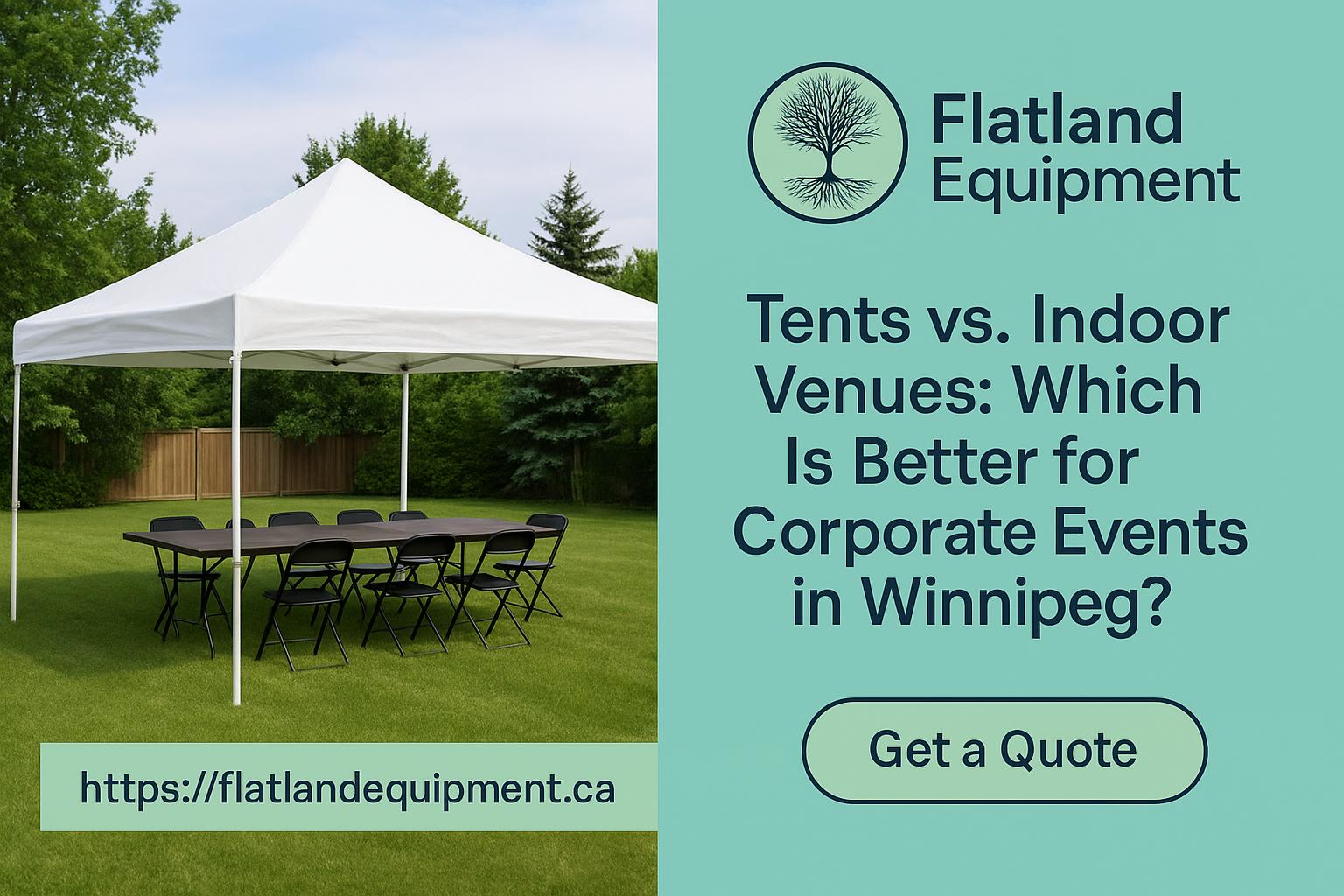
Winnipeg Corporate Events: Tents or Indoor Venues?
Planning a corporate event in Winnipeg usually comes down to one big choice: book an indoor venue, or build your own space with corporate tent rentals. The right answer depends on your date, guest count, brand goals, and how much flexibility you want on layout, staging, and flow.
Winnipeg’s seasonality matters. Most tent season planning lands between late spring and early fall (roughly May through September), while late fall and winter typically push events indoors unless you are building a fully winterized setup. The good news: both options can be done professionally, safely, and comfortably when the plan is clear and the equipment is matched to the conditions.
Quick Decision Guide (When Each Option Wins)
Choose a tent when you want
- Maximum flexibility on layout, branding, and guest flow
- On-site convenience at your office, yard, jobsite, or client location
- A standout experience for product launches, staff appreciation, grand openings, or community-facing events
- The ability to scale up or down with sidewalls, flooring, lighting, heating, fans, and washroom planning
Choose an indoor venue when you need
- Predictable climate and weather-proof access during winter or shoulder seasons
- Built-in washrooms, parking management, and existing power distribution
- Lower operational complexity (less coordination for flooring, HVAC, and site logistics)
- Turnkey AV support for presentations, awards, and formal dinners
Corporate Tent Rentals in Winnipeg: What You’re Really Buying
A corporate tent is not just a canopy. Done right, it is a temporary venue that can feel like a clean, professional extension of your brand. That includes planning the footprint, anchoring, entrances, exits, lighting, power, heating or cooling, flooring, and guest movement from arrival to wrap-up.
Flatland Equipment focuses on practical, Manitoba-ready setups that respect safety, timelines, and real-world logistics. Whether you are hosting a leadership meeting outdoors, a staff BBQ, a multi-day customer event, or a product reveal, the goal is the same: keep it comfortable, keep it safe, and keep it on schedule.
Tent Sizes, Layout, and Realistic Capacity Planning
One of the biggest reasons companies choose a tent is layout control. You decide where the stage goes, where the catering line runs, how guests queue, and how networking zones flow. But capacity only works when you plan for furniture, aisles, and service areas.
Common tent sizes for corporate events
- 20×40 tent: Great for small corporate gatherings, check-in areas, buffet service, sponsor displays, or a covered networking zone.
- 40×80 tent: A strong fit for larger corporate events such as awards dinners, town halls, or multi-zone layouts with dining plus presentations.
Capacity changes based on setup style. A seated dinner needs more space than a cocktail reception. Add a stage, AV table, buffet, bar, or photo wall and you will want additional square footage. A clean rule for Winnipeg corporate planning: size for the experience you want, not just the headcount.
Budgeting: Tents vs Indoor Venues (What Impacts Cost)
Indoor venues often bundle costs into one number, while tented events are built line-by-line. That does not mean tents are automatically more expensive. It means your budget is more customizable and your spend aligns with what you actually need.
Typical cost drivers for a tented corporate event
- Tent size and installation complexity (surface type, access, anchoring requirements)
- Sidewalls (solid or windowed) for wind protection and temperature control
- Flooring or subflooring for comfort, cleanliness, and accessibility
- Lighting for evening events and a polished guest experience
- Climate equipment such as heaters, fans, and ventilation planning
- Power distribution: extension cords, work lights, and safe electrical routing
- Event essentials: tables, chairs, and linens to match your program and seating plan
For many Winnipeg companies, the value is in the flexibility: you can host on-site, reduce travel for staff, and design a branded experience without being restricted by a venue’s fixed layout or vendor rules.
Weather in Winnipeg: Comfort Planning That Actually Works
Winnipeg weather is not a small detail. Wind shifts, sudden rain, heat waves, and temperature drops after sunset are common. A professional plan accounts for all of it, and that is where tented events go from “nice idea” to “smooth execution.”
Warm weather strategy (late spring through summer)
- Use fans and airflow planning to keep guests comfortable during heat
- Consider shaded zones for food, bar service, and speaker areas
- Plan for insects near dusk (especially close to water or wooded areas)
- Ensure safe cable runs for AV and lighting so nobody trips
Cool nights and shoulder season strategy (spring and early fall)
- Add heaters where needed and keep fuel planning realistic
- Use sidewalls strategically to reduce wind chill without trapping stale air
- Consider flooring for comfort, especially on uneven ground or grass
If your event is scheduled in a month where conditions can swing quickly, your plan should include a go/no-go threshold for wind and a clear rain plan for guest arrival, catering, and parking. In Manitoba, “we’ll see how it goes” is not a strategy.
Logistics and Risk Reduction: The Details Guests Never See (But Always Feel)
The best corporate events feel easy. That ease is built on logistics: site access, load-in timing, safe anchoring, and clear contingency planning.
Key logistics that protect your timeline
- Site check before booking: measurements, slopes, underground lines, and access routes
- Load-in plan for catering, rentals, and AV so trucks are not competing for the same space
- Defined entrances and exits to prevent bottlenecks at check-in and at the end of the night
- Safety equipment planning, including fire extinguishers when required by code and best practice
For corporate hosts, risk reduction is also reputational. A stable setup, clear walkways, and professional installation help protect your guests, your brand, and your team.
Indoor Venues in Winnipeg: Where They Shine
Indoor venues are hard to beat for winter events and formal programs that depend on tight AV control. If you are planning a December awards night, a January training session, or a February stakeholder meeting, indoor is usually the most comfortable path with the least weather-related risk.
What indoor venues typically simplify
- Heating, washrooms, and predictable access
- Existing power capacity and fixed lighting
- Acoustics and AV support for presentations
- Parking and snow management (depending on venue)
That said, indoor venues can limit layout creativity and may come with fixed vendor lists, strict time windows for load-in and load-out, or higher total cost once food and service fees are included. If your event goal is “make it feel unique,” a tented venue can give you more control.
Hybrid Approach: A Winnipeg Favorite for Real-World Flexibility
Many corporate events land in the middle: you want the comfort of an indoor space with the energy of outdoors. A hybrid plan can be a perfect fit, especially for summer and early fall.
Examples of hybrid setups
- Indoor presentations with an outdoor tent for networking, bar service, or brand displays
- On-site tent for dining with an indoor space as a backup for speeches or weather shifts
- Covered outdoor check-in and sponsor activation leading into an indoor program
This approach keeps the guest experience polished while reducing your exposure to sudden weather changes.
Film and TV Production Support (Corporate Teams Too)
If your corporate event includes content capture or you are coordinating a production-style shoot, tenting and site equipment can make a huge difference. Production tents create controlled zones for wardrobe, talent holding, video village, and equipment staging. Reliable power planning supports lighting, charging stations, and multi-day operations.
Common production-friendly rentals
- Cast chairs and director-style seating
- Makeup mirrors and prep stations
- Generators and power distribution accessories
- Work lights for early load-ins or evening wraps
If you are filming on-site at your Winnipeg facility, a well-planned tent setup keeps the day organized and protects your schedule.
Permits, Compliance, and Safety Standards in Winnipeg
Corporate hosts are rightly cautious about permits, access routes, and fire safety. Requirements can vary depending on location, tent size, occupancy, and whether cooking is happening on-site. The goal is simple: clear emergency access, safe equipment placement, and a site plan that meets expectations without slowing down your build.
If you are unsure what applies to your site, plan early. Waiting until the last week is where costs rise and options shrink.
Event Flow and Space Design (How to Make It Feel Premium)
Great corporate events have a rhythm. Guests arrive, find their way naturally, feel taken care of, and move through the space without confusion. A tent gives you the freedom to design that flow, but you need a plan.
What we recommend for smooth guest experience
- Create a clear welcome zone with signage, check-in, and coat or gift handling
- Keep catering and bar lines out of main walkways
- Separate loud and quiet zones (presentation area vs networking)
- Use barricades and traffic control equipment where needed for pedestrian guidance
- Plan lighting so guests can walk safely and the space photographs well 📸
Even a simple staff event feels more professional when the layout is intentional.
Final Checklist: Tents vs Indoor Venue (Winnipeg Edition)
- Date and temperature range: What is the realistic comfort plan?
- Guest count and seating style: Cocktail, theatre, classroom, or seated dinner?
- Power needs: AV, lighting, catering equipment, charging stations
- Ground conditions: grass, gravel, pavement, or mixed surfaces
- Accessibility: paths, flooring, entrances, and washroom access
- Timeline: load-in, setup, event hours, teardown, and site restoration
- Safety: anchoring, exits, fire safety planning, and clear walkways
- Brand experience: signage, layout, lighting, and guest touchpoints
If you want the most control over your corporate event experience, tenting is often the better tool. If you want maximum predictability in winter or a highly formal program with fixed AV, indoor venues typically win. If you want the best of both, a hybrid plan is a very Winnipeg solution.
Service Area
In Winnipeg: St. James-Assiniboia, River Heights, Transcona, Charleswood, Fort Garry, St. Vital, West Kildonan, North Kildonan, Fort Rouge, St. Boniface, Osborne Village, Exchange District, Corydon Village, Tuxedo, Point Douglas, Inkster, Seven Oaks, The Maples, Garden City, Whyte Ridge, Island Lakes, Sage Creek, Bridgwater Forest, Bridgwater Lakes, Bridgwater Centre, South Pointe, Royalwood, Richmond West, River Park South, North Point Douglas.
Surrounding Areas: Headingley, Oak Bluff, La Salle, St. Norbert, Niverville, Birds Hill, East St. Paul, West St. Paul, Stony Mountain, Lockport, Selkirk, St. Andrews, Lorette, Landmark, St. Adolphe, St. Francois Xavier, Sanford, Starbuck, Ile des Chenes. Need to head out of town with the truck? Just let us know and we’ll make sure you’re good to go.
Ready to Plan Your Corporate Event?
If you’re weighing tents vs indoor venues for a Winnipeg corporate event, we can help you map the right setup, timeline, and equipment list so it runs clean from load-in to final walk-through. Call 204-416-7229 or book through https://flatlandequipment.ca/ to get a quote and lock in your date.