Cleaner Sets. Lower Costs. Better Environmental Performance.
Large film productions generate a lot of waste.
Set construction materials.
Catering leftovers.
Wardrobe packaging.
Water bottles.
Disposable food containers.
Smoking waste.
Production office materials.
And that’s before teardown begins.
Without a plan, waste can quickly become a safety issue, a compliance concern, and an unnecessary expense.
That’s why waste diversion has become an important part of modern film production management.
The goal isn’t simply to remove garbage.
The goal is to reduce waste, improve recycling, support sustainability goals, and create a cleaner, safer production environment.
What Is Waste Diversion?
Waste diversion refers to strategies that redirect materials away from landfills whenever possible.
This typically includes:
♻ Recycling programs
🌱 Composting initiatives
📦 Material reuse
🗑 Organized waste collection
🚬 Controlled smoking waste disposal
A successful waste diversion plan helps productions reduce environmental impact while improving site organization.
Why Waste Diversion Matters on Film Sets
Film productions operate under tight schedules.
Every department is moving.
Every crew member is busy.
Without clearly organized disposal systems, waste tends to accumulate quickly.
This can create:
❌ Cluttered work areas
❌ Blocked walkways
❌ Safety hazards
❌ Contaminated recycling streams
❌ Additional labour costs
❌ Municipal complaints
❌ Negative public perception
A cleaner production site is easier to manage and safer for everyone involved.
Start Planning Before Production Begins
The best waste diversion programs start during pre-production.
Not after trucks arrive.
Not after garbage starts piling up.
Before filming begins, productions should identify:
✔ Where waste will be generated
✔ Which departments generate the most waste
✔ Where disposal stations should be located
✔ Recycling opportunities
✔ Servicing schedules
✔ Cleanup responsibilities
Planning early helps avoid costly adjustments later.
Every Department Creates Different Waste
Not all production waste is the same.
Different departments require different solutions.
🍽 Catering & Craft Services
Common waste includes:
✔ Food containers
✔ Coffee cups
✔ Beverage containers
✔ Food scraps
✔ Packaging
These areas often benefit from dedicated garbage, recycling, and composting stations.
🎬 Set Construction & Art Departments
These departments generate:
✔ Cardboard
✔ Packaging materials
✔ Lumber offcuts
✔ Protective wrap
✔ Construction debris
Durable disposal containers help maintain organization during build and strike periods.
👗 Wardrobe & Production Offices
Waste often includes:
✔ Packaging
✔ Shipping materials
✔ Office supplies
✔ Paper products
Clearly marked recycling stations can significantly reduce landfill waste in these areas.
🚬 Designated Smoking Areas
Smoking zones should never be overlooked.
Dedicated butt buckets help:
✔ Reduce litter
✔ Improve cleanliness
✔ Support safety goals
✔ Reduce fire risks
Simple solutions often create meaningful improvements.
Use the Right Equipment
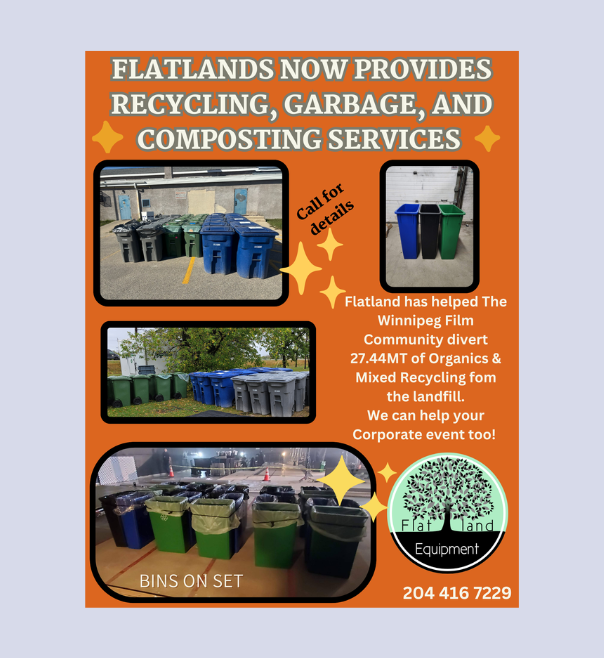
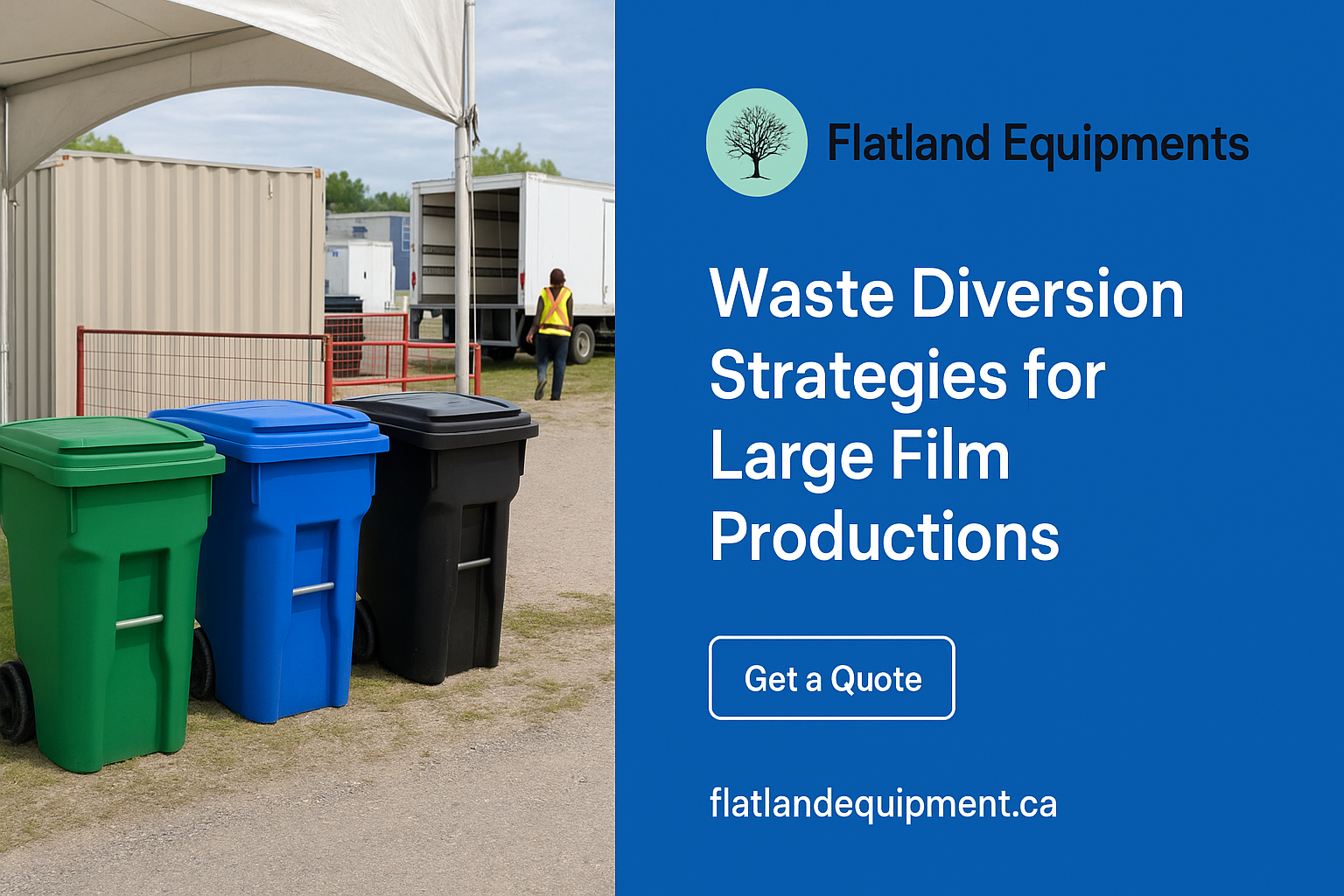
A successful waste diversion strategy depends on having the right equipment in the right locations.
Common solutions include:
🗑 Garbage cans
♻ Recycling stations
🪣 Galvanized pails
🚬 Butt buckets
🧹 Garbage pickers
🚛 Commercial waste containers
When equipment is positioned correctly, participation improves and contamination decreases.
Recycling Works Best When It’s Easy
Many productions want to improve recycling rates.
The challenge is making recycling convenient.
The most successful recycling programs share a few common traits:
✔ Clear signage
✔ Consistent placement
✔ Simple sorting categories
✔ Frequent servicing
✔ Visible collection stations
If recycling requires extra effort, participation typically declines.
Keep it simple.
Safety and Waste Management Work Together
Waste management isn’t just an environmental issue.
It’s a safety issue.
Overflowing bins.
Loose debris.
Blocked pathways.
Poorly placed disposal stations.
All of these can increase risk.
That’s why cleanup planning should work alongside:
🚧 Traffic control plans
🦺 Safety programs
🚶 Pedestrian flow routes
🚚 Loading and unloading zones
📍 Site signage
Cleaner sites are safer sites.
Winnipeg Weather Requires Additional Planning
Manitoba weather can create unique challenges for waste management.
Productions often encounter:
🌧 Rain
🌬 High winds
❄ Snow
🥶 Freezing temperatures
These conditions can lead to:
❌ Windblown debris
❌ Saturated cardboard
❌ Overflowing bins
❌ Slippery surfaces
❌ Difficult cleanup conditions
Weather-resistant planning helps maintain site standards throughout production.
Multi-Day Productions Need Ongoing Support
A one-day commercial shoot has different needs than a six-week television series.
Longer productions often require:
✔ Scheduled servicing
✔ Ongoing waste collection
✔ Recycling management
✔ Site inspections
✔ Daily cleanup support
✔ Flexible adjustments as production changes
Consistency is what keeps sites clean throughout the entire production schedule.
Better Waste Management Protects Production Budgets
Many productions focus on equipment budgets.
Few realize how expensive poor waste management can become.
Without a structured plan, productions may face:
❌ Emergency cleanup costs
❌ Overtime labour
❌ Site restoration expenses
❌ Location penalties
❌ Delays during strike
❌ Additional disposal charges
Proactive planning almost always costs less than reactive cleanup.
Supporting Sustainability Without Slowing Production
The best sustainability programs fit naturally into production operations.
They don’t create extra work.
They create better habits.
When disposal stations are clearly marked and properly located, crews participate without needing constant reminders.
The result is:
✔ Less waste sent to landfill
✔ Better recycling participation
✔ Cleaner locations
✔ Improved compliance
✔ Stronger environmental performance
Why Productions Choose Flatland Equipment
Flatland helps film productions maintain cleaner, safer, and more organized worksites.
Our services include:
✔ Garbage can rentals
✔ Recycling stations
✔ Galvanized pails
✔ Butt buckets
✔ Garbage picker rentals
✔ Waste diversion planning
✔ Site support services
✔ Multi-day production support
Our goal is simple:
Help productions reduce waste while improving efficiency and site organization.
Supporting Productions Across Winnipeg & Manitoba
Flatland supports:
🎬 Feature Films
📺 Television Productions
📹 Commercial Shoots
🎥 Documentaries
🎵 Music Videos
🎪 Festivals
🏢 Corporate Activations
🏛 Municipal Projects
Whether you’re working from a downtown production office, a rural filming location, or a multi-acre production compound, we can help create a waste diversion strategy that works.
Service Areas
We proudly serve Winnipeg and surrounding communities including:
St. James-Assiniboia, River Heights, Transcona, Charleswood, Fort Garry, St. Vital, West Kildonan, North Kildonan, Fort Rouge, St. Boniface, Osborne Village, Exchange District, Corydon Village, Tuxedo, Point Douglas, Inkster, Seven Oaks, The Maples, Garden City, Whyte Ridge, Island Lakes, Sage Creek, Bridgwater Forest, Bridgwater Lakes, Bridgwater Centre, South Pointe, Royalwood, Richmond West, River Park South, North Point Douglas, Headingley, Oak Bluff, La Salle, St. Norbert, Niverville, Birds Hill, East St. Paul, West St. Paul, Stony Mountain, Lockport, Selkirk, St. Andrews, Lorette, Landmark, St. Adolphe, St. Francois Xavier, Sanford, Starbuck, and Ile des Chenes.
Plan Ahead Before Your Next Production Starts
The most successful waste diversion programs begin before the first truck arrives on site.
If you’re planning a film production, television series, commercial shoot, festival, or large-scale event, now is the time to create a cleanup strategy that supports sustainability, safety, and operational efficiency.
📞 Call Flatland Equipment today at (204) 416-7229
🌐 https://flatlandequipment.ca/recycling-garbage-and-composting-services/
Let’s build a cleaner, safer, and more environmentally responsible production from prep to wrap.